
Perspectives

Facilities Management: The Missing Link in Sustainability
Author: Tanya Broadfield - Global Head of Sustainability at Macro
Sustainability targets are set in the boardroom but delivered in buildings. We explore how facilities management turns ESG commitments into measurable results.
Most organisations now have ambitious sustainability strategies. They set targets, publish commitments and invest heavily in reducing the impact of their products, services and supply chains.
Yet one area is often overlooked: the buildings from which all of that work happens. Buildings drive energy use, carbon emissions, resource consumption, employee wellbeing and regulatory compliance. And while sustainability goals are typically set at corporate level, many of the actions needed to achieve them are delivered through facilities management (FM).
So could FM be the missing link between sustainability ambition and measurable results?
Bridging the gap between strategy and operations
In many organisations, real estate sustainability and facilities management have evolved as separate disciplines. Sustainability teams may focus on corporate reporting, net zero strategies and responsible sourcing, while FM teams run buildings, manage the day-to-day operation of workplace services.
The problem is that most sustainability goals depend on what happens inside those buildings. When the two teams work in isolation, strategy drifts away from delivery and opportunities to cut carbon, cost and waste are missed.
According to the UNEP and GlobalABC Global Status Report for Buildings and Construction 2025–2026, the buildings and construction sector accounts for 37% of global emissions, 28% of global energy consumption and nearly 50% of global material extraction.
Buildings also shape how people feel and perform. Most of us spend more than 90% of our time indoors, making the workplace a critical factor in employee health, wellbeing and productivity.
Despite this, sustainability and facilities management functions often operate separately, creating a disconnect between corporate ambition and operational delivery.
When these teams work in isolation, organisations miss opportunities to maximise the environmental and social value of their estate, and strategy drifts away from delivery.
Where FM moves the needle
Facilities management touches almost every part of an organisation's environmental and social footprint. Five levers matter most:
- Energy and carbon. FM controls how heating, cooling, lighting and plant are run, maintained and upgraded. Smarter scheduling, planned maintenance and smart building technology cut consumption without a capital project.
- Data and reporting. FM holds much of the operational data that Scope 1 and 2 reporting depends on, and a growing share of Scope 3. Reliable metering and connected sensors turn that data into evidence the board and auditors can trust.
- Waste and resources. From procurement to recycling contracts, FM decides what comes into a building and what leaves it.
- Supply chain. FM partners manage dozens of service providers, each with its own footprint, so sustainability standards can be built into every contract.
- People and community. Healthy workplaces, local employment and community partnerships all run through the services FM delivers.
None of these levers sits on a sustainability strategy slide. They sit in the day-to-day running of buildings, which is why FM is becoming a strategic enabler rather than an operational cost.
Why FM sits at the centre of sustainability
Facilities management is uniquely positioned to influence environmental, social and governance outcomes across an organisation's estate.
From improving energy efficiency and reducing waste to creating healthier workplaces and delivering social value, FM teams shape sustainability performance every day. As stakeholder expectations and regulatory requirements continue to grow, FM is increasingly becoming a strategic enabler of sustainable performance rather than simply an operational service.
Turning commitments into outcomes
The organisations making the most progress on sustainability are those that successfully connect corporate objectives with operational delivery.
Facilities management plays a critical role in making this happen, embedding sustainability into the way buildings, assets and services are managed. Management systems such as ISO 14001 (environmental) and ISO 50001 (energy) help organisations systematically set targets, track performance and improve year on year. FM teams run those systems on the ground.
Building certifications such as BREEAM, LEED, WELL and Fitwel provide recognised frameworks for improving and validating building performance, and FM supplies much of the operational evidence they require.
While management systems provide the framework, achieving sustainability outcomes often requires action on the ground. Whether implementing energy efficiency measures, deploying new technologies, improving workplace environments or delivering decarbonisation projects, organisations need the capability to translate plans into successfully delivered programmes of work. Facilities management can play a key role in identifying opportunities, while effective project delivery helps turn ambition into results.
Together, these provide the governance, accountability and continuous improvement that sustainable performance depends on.
Tanya Broadfield, Head of Sustainability at Macro
"Sustainability isn't delivered through a single initiative or technology. It's the result of thousands of decisions made across buildings, assets and services every day"
From service function to strategic partner
If sustainability is delivered in buildings, FM needs a seat at the table where targets are set. Three questions will show whether yours has one:
- Does your FM partner own any of your sustainability targets? If FM isn't accountable for specific outcomes, such as energy, waste or carbon, it's being managed as a cost rather than a lever.
- Can you trust your building data? Your sustainability report is only as strong as the metering, maintenance records and supplier data behind it.
- Do your sustainability and FM teams plan together? A shared roadmap and regular joint reviews keep strategy and delivery moving in the same direction.
As organisations work to improve environmental performance, strengthen resilience and create healthier workplaces, the most successful will be those that treat FM not as a support function, but as a strategic partner capable of turning sustainability commitments into operational reality.
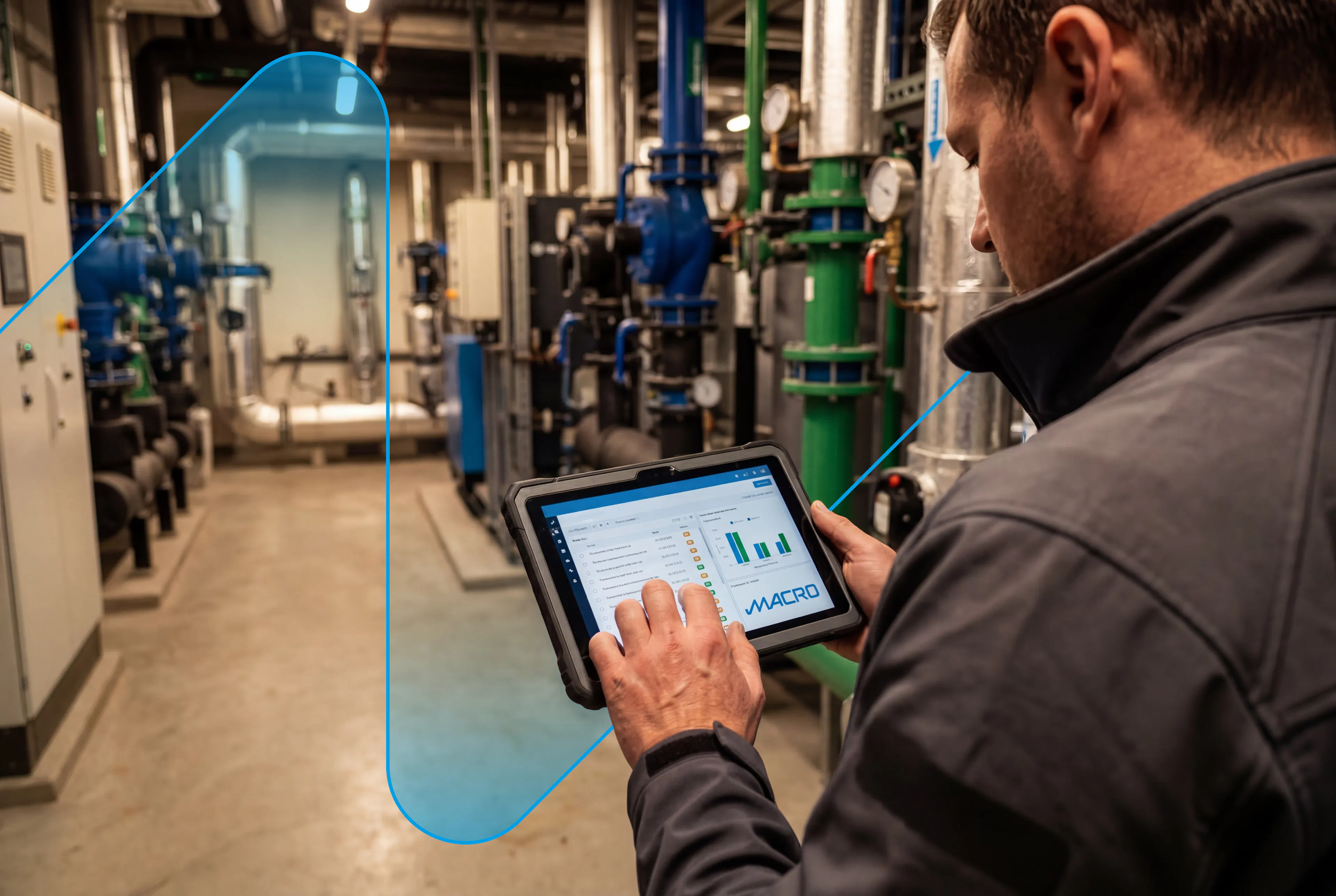
Ready to close the gap between your sustainability strategy and your facilities?
We help organisations translate corporate sustainability ambitions into measurable outcomes across their workplaces and real estate portfolios.
Talk to our sustainability teamMore perspectives

The Future of Facilities Management - Why Smart Buildings Matter
Discover how smart buildings are transforming facilities management. From IoT and AI to predictive maintenance, sustainability, and workplace wellbeing, learn why intelligent buildings are the future of the built environment.
Internet of Things in Facilities Management - How IoT Transforms FM
How IoT transforms Facilities Management | Macro

How FM Helps UAE Schools Score Higher
How FM Helps UAE Schools Score Higher

What is corporate office facilities management?
A comprehensive overview of corporate office facilities management services and their role in supporting modern organisations

IFMA World Workplace 2026: Macro to Join Key Conversations Shaping the Future of Facilities Management
Macro is proud to be attending IFMA World Workplace 2026, taking place in Anaheim, California, from 18-20 November.
Invisible Until It Isn’t: What WORKTECH26 New York Taught Us About the Frictionless Workplace
Takeaways from WORKTECH26 New York: Macro on FM and the fight for a frictionless workplace, magnets not mandates, and people-first workplace design.