
Perspectives
Invisible Until It Isn’t: What WORKTECH26 New York Taught Us About the Frictionless Workplace
Key Takeaways
Give people a reason to come in. Culture, connection, collaboration and learning can make the workplace worth the journey.
Design for the way teams gather. A remote-first organisation can still invest in distinctive, purposeful spaces for shared work.
Make everyday issues easy to report. Small facilities problems can accumulate into a poor workplace experience if they go unseen.
Employee experience is built through routine interactions with the workplace, not only through headline design features. Think about the operational reality of the building on day 100.
Make it easy to report problems to give workplace teams a better view of what needs attention. It can also reveal patterns that are hard to spot through formal channels alone.
Is the office worth the commute?
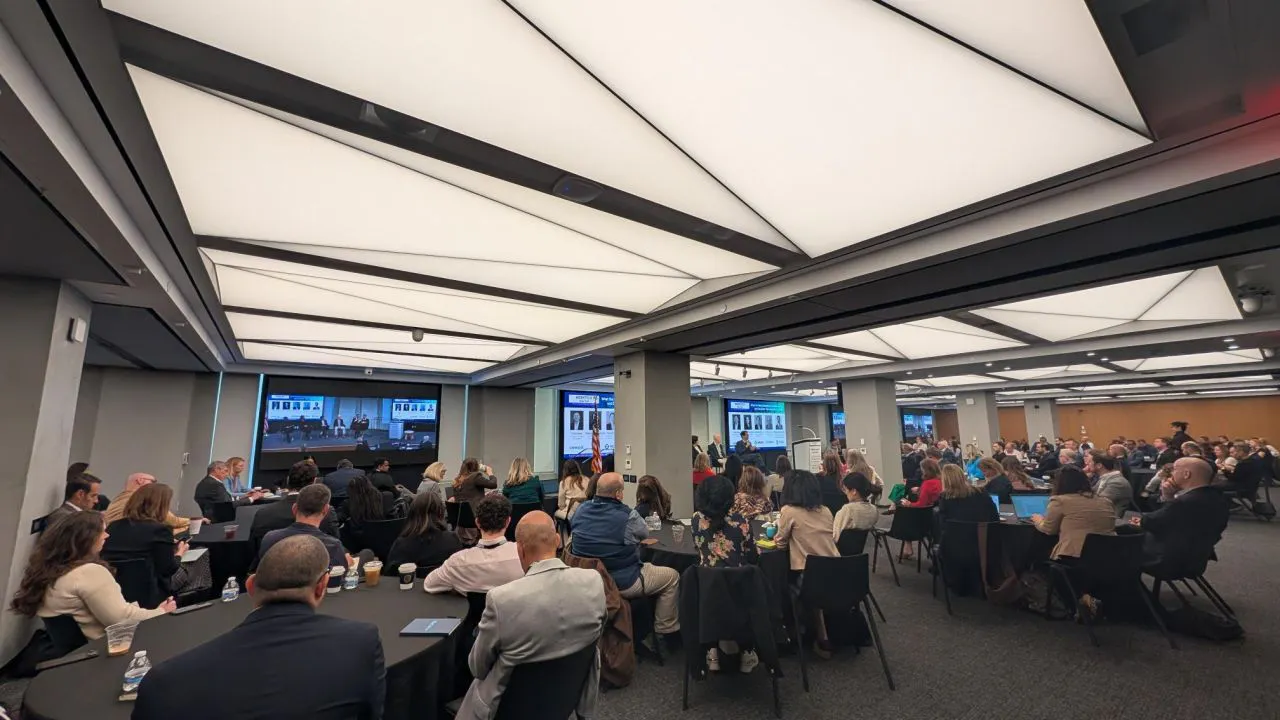
On 8 October in New York, more than 30 speakers and an audience of over 270 senior workplace, real estate, technology and HR leaders gathered at DC 37 on Barclay Street for WORKTECH26 New York. One question ran through almost every session: what makes the office worth the commute?
The day covered the next generation of headquarters and corporate campuses, the role of AI and technology in workplace experience, and how fast employee expectations are shifting. Speakers kept coming back to speed and flexibility: the ability to pivot, evolve amenities and respond to how people work today.
What stood out was how few of the presenting organisations rely on mandates. Most encourage in-office collaboration but leave room for flexibility. Instead, they start with how they want people to feel when they arrive: inspired, comfortable and cared for. The office, several speakers argued, should support cultural identity, bonding experiences and hospitality.
But one line from a speaker cut through the vision: “If you don’t get the basics straight, you have a problem.” That idea sat at the heart of Macro’s own session.
Spotlight: Invisible until it isn’t
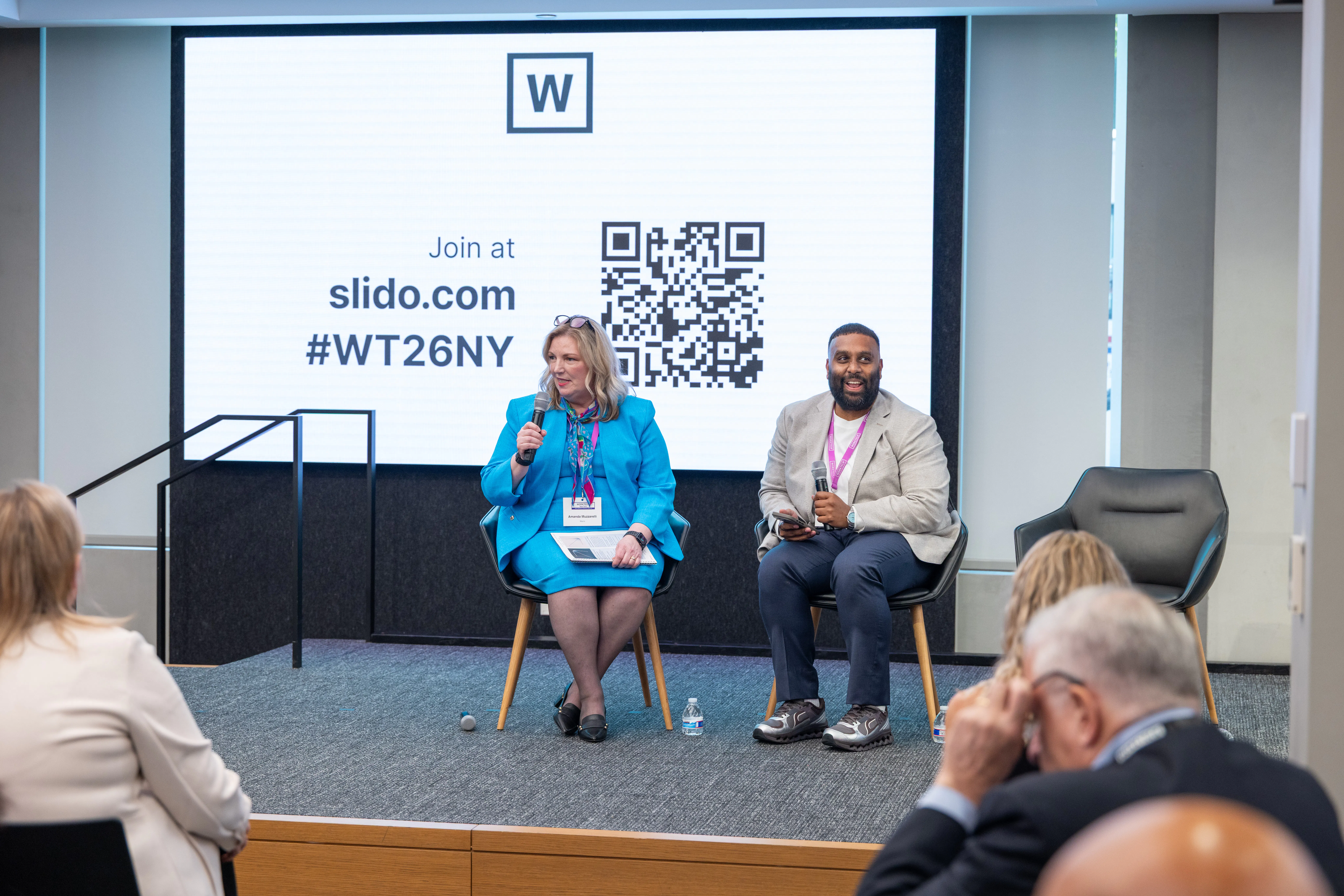
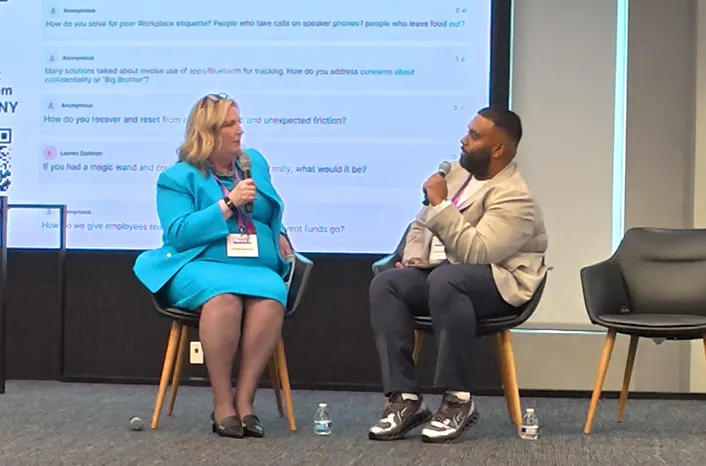
Macro’s Amanda Muzzarelli, Americas Operations Director, and Kevin Persaud, Workplace and Facilities Leader at On, hosted an interactive debate on facilities management and the fight for a frictionless workplace. Drawing on Macro’s Friction Economy report with WORKTECH Academy, they tackled a question many organisations struggle with: why can a company invest heavily in space, technology and employee experience, yet still fail to reduce friction?
Their answer: the operational relationships, decision pathways and dynamics behind a workplace are often invisible. When those invisible systems aren’t aligned, friction happens. The audience joined in throughout, sharing their own stories, and many of those stories came back to the basics of operations.
“Who has ever arrived ready to work, then spent 10 minutes making the office work?”
Kevin Persaud, ON
Kevin opened with that question, and plenty of hands went up. In a day focused on technology and employee-centric design, he made the case for FM. “Everything is about reducing friction, technology or being employee centric,” he said. “What are we doing to make a more frictionless workplace?”
Many of the things that remove friction depend on everyday diligence, not the technology people picture first. As Amanda put it: “Self-running buildings, I love that idea – but I have not seen AI change a filter!”
The real test is day 100, not opening day
For Kevin, the standout finding in the report was where design and operations drift apart. Offices are designed for launch day, but what counts is how the space is used and cared for over time, and who the usage data is shared with.
Amanda linked this to a core theme of the Friction Economy report: the gap between designing a space, using it and caring for it. Even the most inspiring workplaces rely on ongoing care to keep delivering the experience they were designed for. Something as simple as HVAC not working or running out of toilet paper can undo that experience, and even an empty space still needs cleaning. Closing that gap is where FM makes the difference.
Kevin also described a two-hour commute that ends in workstation woes, patchy Wi-Fi and uncomfortable temperatures. These frustrations are universal, he said, and we can’t keep adding them to the commute. It’s the magnet, not the mandate, that makes the journey worth it.
How self-service moved friction onto employees
“There is no magic wand for FM,” Amanda said. There was a time when, if you needed a charging cable, someone would run and bring it to you; the friction was transferred to someone else. Then self-service took hold, and employees started raising their own work orders and Amanda cited this is where the friction began. The task now is to make those processes as easy as possible, and speed is key.
Some organisations are moving away from self-service altogether, towards a hospitality model with concierge-level service.
The frustrations we’ve learned to live with
The session named the everyday irritations that have quietly become normal: meeting room IT set-up, too much noise, people talking out loud, inconsistent temperatures and desk booking systems. One delegate shared that it had taken them an hour and 15 minutes to get connected in a meeting room, before the work had begun. When such issues go unreported or are slow to resolve, they become a repeated source of frustration.
With employers focused on health, wellness and reducing stress, these small frictions matter more than they appear.
Not all friction is bad
Amanda also made the case for positive friction. Waiting for the kettle to boil while making a coffee, for example, creates moments of connection and belonging between colleagues.
She was honest about expectations, too. Being cared for in a hospitality-led workplace is wonderful, but it won’t happen every day. When friction hits, keep a positive, open mind: someone is working on it, and the industry just needs to go faster. Her mantra for FM was simple: keep it clean, keep it safe.
“The broader point is that employee experience is built through routine interactions with the workplace, not only through headline design features”
Amanda Muzzarelli, Macro
Magnets, not mandates
If one phrase defined the day, it was “magnets, not mandates”. Coinbase, remote-first since 2020, shared how it designs its hubs for intentional presence rather than continuous attendance.
The design centres on gathering. Coinbase brings teams together in concentrated periods, so its New York hub was conceived as a place for those shared moments: team meetings, events, all-hands sessions and informal encounters. Food, amenities and colleagues can all act as ‘magnets’, giving people a reason to come together without relying on mandates.
The principle is simple: build spaces people want to be in. That means more focus on the quality of the office and the experience it provides, not just the square footage.
People first: Make Work Work
Deborah Lovich, Managing Director and Senior Partner at BCG, gave one of the day’s most memorable sessions, drawing on her book Make Work Work. Her message: amenities and policy matter, but leading, inspiring and motivating people matters more.
She observed that organisations are still not employee-centric enough, with Gallup data showing employee engagement at an all-time low. Companies should be customer-obsessed, she argued, but also treat employees as customers, because they drive shareholder growth. Work itself should be designed to be enjoyable.
She also urged leaders to bring the employees who deliver the work and create the value into the design process. Don’t develop a new workflow at a distance and then ask people to adopt it; build it with them. The same principle applies to the workplace itself. Involving FM teams, the people who will run and care for a space every day, from the start of the design process is how organisations avoid the gap between design and operations that Amanda and Kevin described.
Data, AI and buildings built backwards
The professional services panel, with leaders from EY, KPMG and Deloitte, showed how far ahead real estate leaders now plan: many are working ten years out. The way work gets done is changing and will keep changing, so office planning needs real insight, innovative thinking and technology that enables scale.
The panel also discussed the role of AI in helping organisations collate and make sense of the growing volume of IoT data their buildings generate, from occupancy to temperature and energy use.
Kaiterra argued that we’ve been building buildings backwards. The industry measures what’s easy to count and overlooks the four elements that decide whether people can work well: light, temperature, sound and air. His fix is data visibility and transparency, and using technology to bring personalisation into the workplace.
Utilisation data can show where and when space is used, but understanding what people are doing there – and whether the environment supports the task – requires a richer picture
The magnet only works if the basics do
Across the day, the vision was clear: offices that work as magnets, designed around how people feel, powered by data and AI, and led by people-centred leaders. But every one of those ambitions rests on something less visible. The Wi-Fi has to connect, the temperature has to be right, the meeting room has to work and the space has to be clean.
“If you don’t get the basics straight, you have a problem.”
WORKTECH conference presenter
That is where facilities management earns its place in the workplace experience conversation. It is invisible when it works, and the first thing people notice when it doesn’t. Closing the gap between workplace strategy and operational delivery is how organisations turn investment in space and technology into a workplace people actually want to commute to.
Visit WORKTECH to find out more about future WORKTECH events.
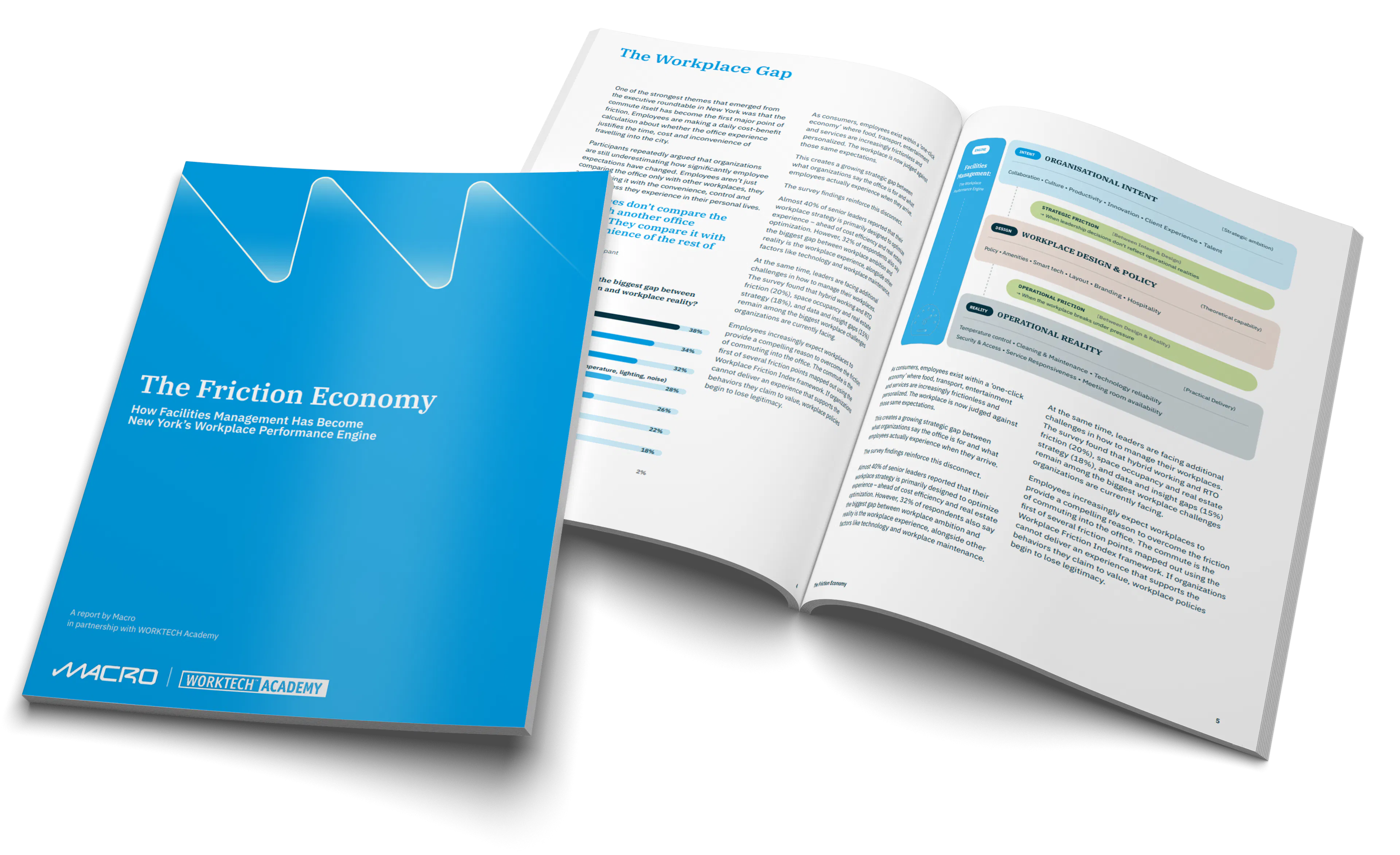
The Friction Economy Report
To explore the research behind Amanda & Kevin’s session, download Macro’s Friction Economy report, produced with WORKTECH Academy.
Access the reportMore perspectives

What is CAFM?
CAFM stands for Computer-Aided Facility Management. At its core, it's FM management software designed to plan, manage, and maintain physical spaces, assets, and operations from a single platform.

Bringing the Brand to Life: Key Takeaways from Macro's Retail FM Event in London
Macro welcomed more than 70 retail property, facilities management and workplace leaders to London for a Retail FM event exploring the role of FM in bringing brand's to life through in-store retail experiences
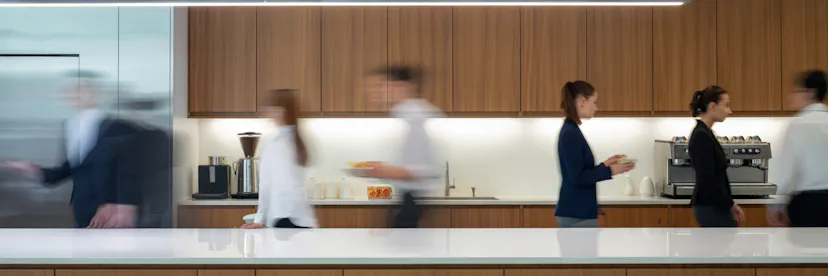
What is SLA in facilities management?
Learn what an SLA in facilities management is, with examples of SLA maintenance and property maintenance agreements that set clear service standards.
Why Great FM Strategies Fail During Execution: Amanda Muzzarelli Joins IFMA's Connected FM Podcast
Macro's Amanda Muzzarelli joins IFMA's Connected FM podcast to discuss institutional knowledge, psychological safety and leading FM teams through execution.
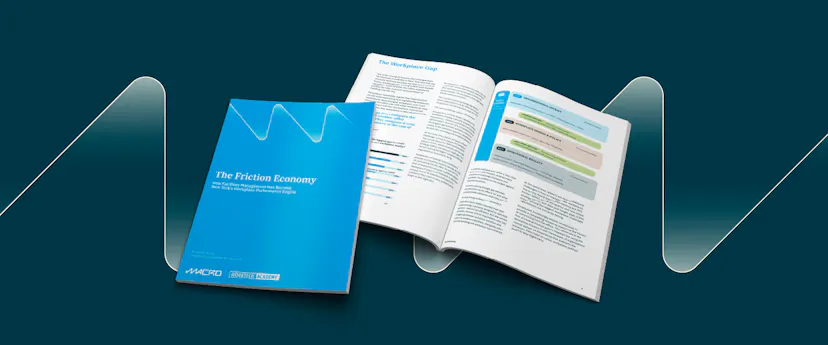
New opportunities for Facilities Management highlighted in The Friction Economy Report
Macro x WORKTECH Academy - The Friction Economy: how facilities management has become New York's workplace performance engine

Inside Macro’s Smart Building Solution - How We Deliver Intelligent FM
Discover Macro’s Smart Building Platform – combining IoT, AI, and digital twin technology to deliver predictive maintenance, energy efficiency, and people-focused spaces. Scalable, secure, and data-driven, our solution transforms facilities management with real-time insights, sustainability gains, and smarter operations.