
Perspectives
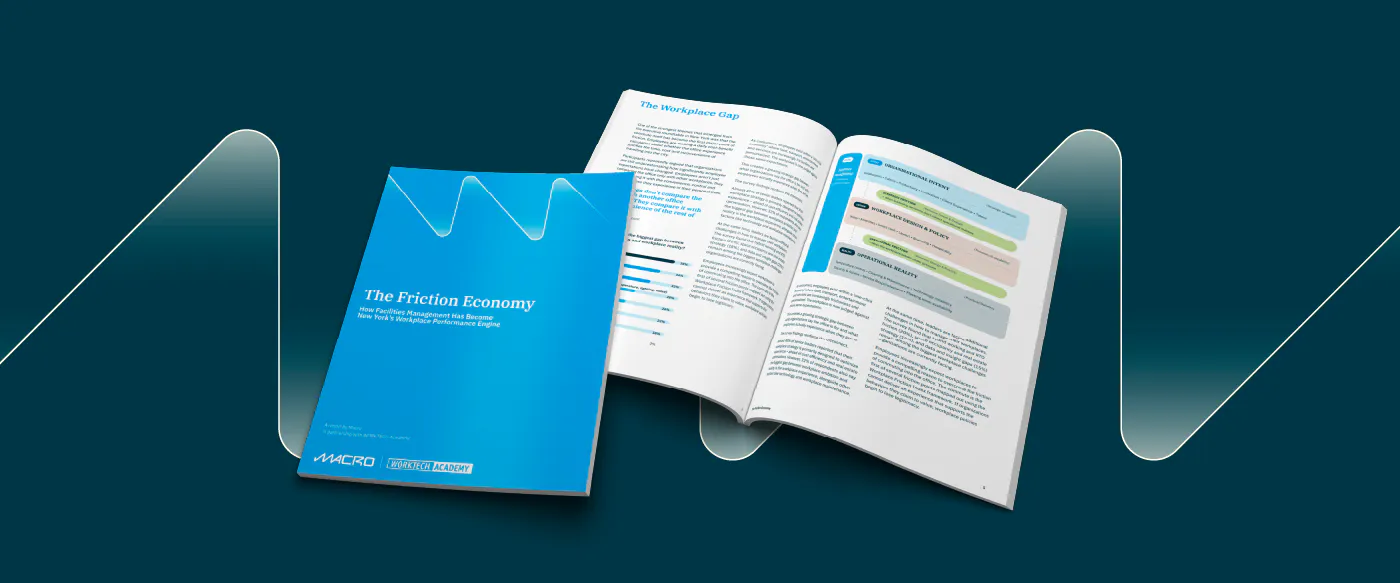
New opportunities for Facilities Management highlighted in The Friction Economy Report
Insights at a glance
Workplace friction is a hidden cost
Small operational failures can have a big impact
People expect the workplace to work seamlessly
Facilities Management is critical to delivering workplace strategy
Workplace performance is more than attendance
What makes a workplace work well? It’s easy to focus on the big things like location, design, technology and the policies that shape when and where people work. But often, it’s the smaller, everyday frustrations that have the biggest impact on people’s experience.
That’s the focus of The Friction Economy, a new report from Macro, developed in partnership with WORKTECH Academy.
Based on research with almost 250 workplace leaders across New York City, the report explores the gap between workplace ambition and the reality that employees experience every day.
At a time when organisations are investing in their workplaces and thinking carefully about how to make the office somewhere people want to be, understanding these everyday experiences really matters.
Workplace friction is getting in the way.
One of the clearest findings from the research is that workplace friction is widespread.
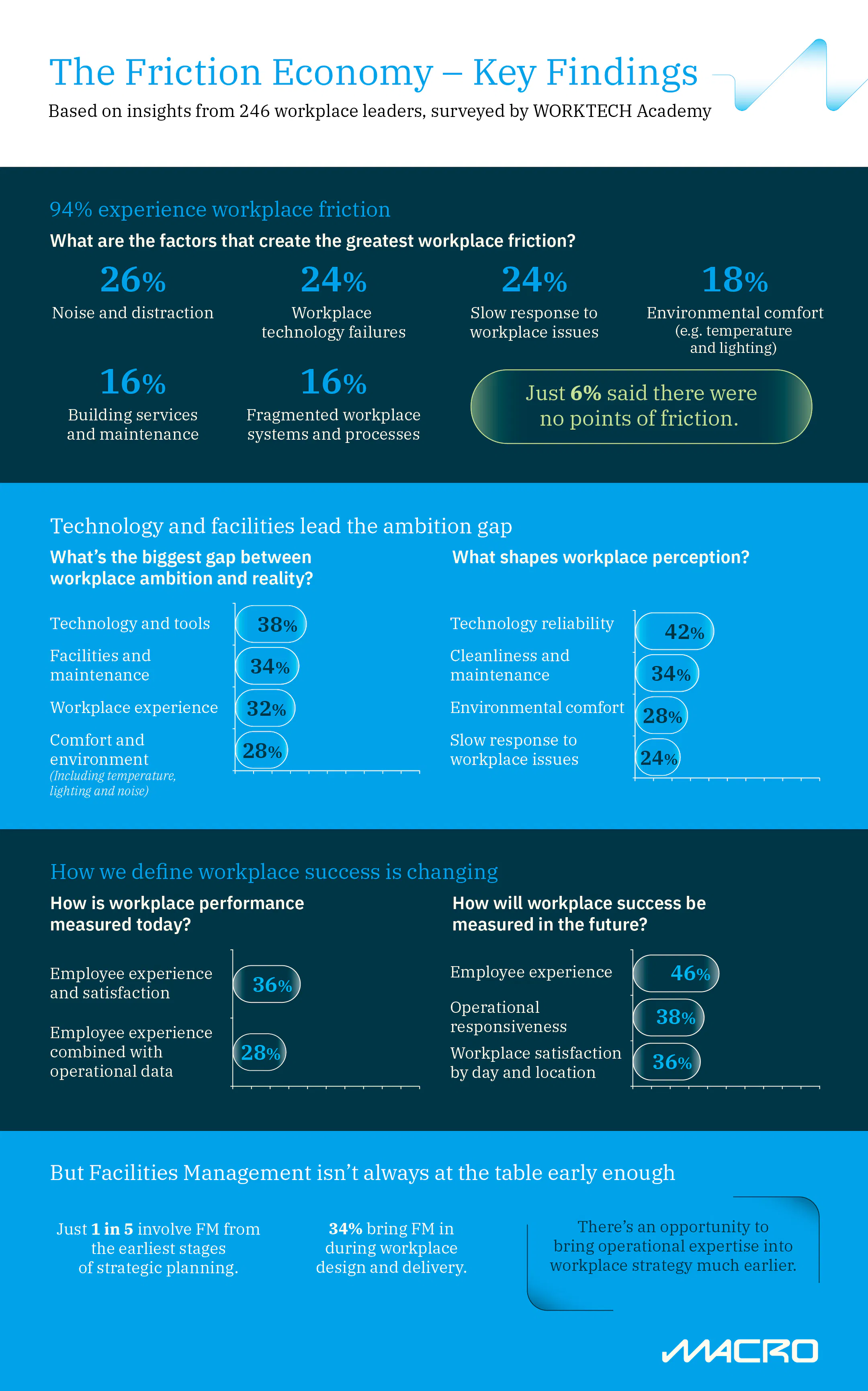
Just 6% of respondents said there were no points of friction in their workplace.
The biggest frustrations found weren’t necessarily dramatic ones. Noise and distraction was the most commonly identified source of friction at 26%, followed by workplace technology failures and slow responses to workplace issues, both at 24%. Individually, these issues might seem relatively small but when these frustrations happen regularly, they add up.
These things can also make it harder for people to focus, collaborate and simply get on with their work. When organisations are asking more of their workplaces, these seemingly small points of friction become increasingly important.
The research also highlights a wider disconnect between what organisations want their workplaces to deliver and what happens in practice. 38% identified technology and tools as an area where there’s a gap between ambition and reality, followed by facilities and maintenance at 34% and workplace experience at 32%.
What does this mean for Facilities Management?
Many of the issues shaping people’s experience of the workplace are areas where FM can make a real difference.
Technology reliability, cleanliness and maintenance, environmental comfort and responsiveness all emerged as important drivers of workplace perception. These aren’t always the most visible elements of workplace strategy but they can have a significant impact on whether an environment actually delivers what employees need from it.
Yet just one in five respondents said FM is involved from the earliest stages of workplace strategy. We believe there’s an opportunity to change that.
The opportunity for Facilities Management
Bringing FM expertise into the conversation earlier can help organisations consider not only what they want a workplace to achieve but how that vision will work in practice. It means thinking about the everyday operational experience alongside bigger decisions around design, technology and workplace strategy.
That becomes even more important as organisations rethink what a successful workplace looks like in the future.
Our research suggests that the measures organisations use to understand workplace performance are changing. Employee experience, operational responsiveness and workplace satisfaction are all expected to become increasingly important over the next three years.
Together, the findings point towards a broader role for FM, one that connects workplace strategy with the day-to-day experience of the people using it.
Explore the full findings
The Friction Economy report takes a deeper look at the factors influencing workplace experience and the opportunities for organisations to create more seamless, high-performing environments.
It also explores what the findings mean for the future role of FM and how bringing operational thinking into workplace strategy earlier could help remove the friction employees experience every day.
Download The Friction Economy Report
Access the full research report from Macro & WORKTECH Academy, including data, insights and practical frameworks to improve workplace performance; based on research insights from nearly 250 workplace leaders in New York.
More perspectives

IFMA World Workplace 2026: Macro to Join Key Conversations Shaping the Future of Facilities Management
Macro is proud to be attending IFMA World Workplace 2026, taking place in Anaheim, California, from 18-20 November.
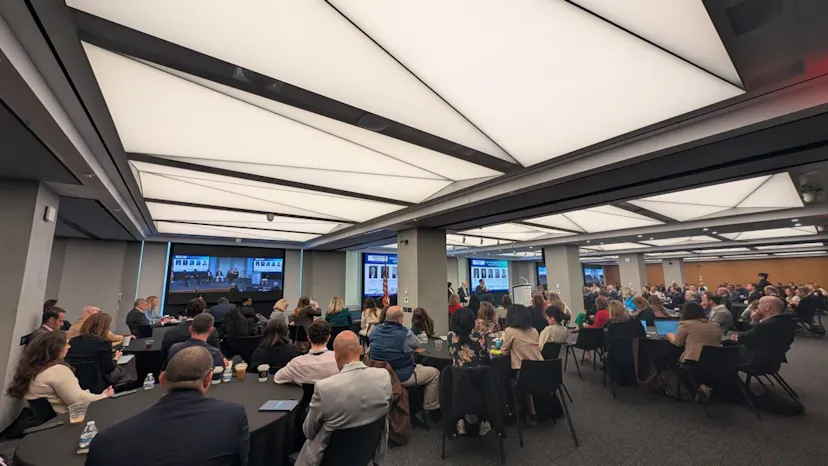
Invisible Until It Isn’t: What WORKTECH26 New York Taught Us About the Frictionless Workplace
Takeaways from WORKTECH26 New York: Macro on FM and the fight for a frictionless workplace, magnets not mandates, and people-first workplace design.

What is CAFM?
CAFM stands for Computer-Aided Facility Management. At its core, it's FM management software designed to plan, manage, and maintain physical spaces, assets, and operations from a single platform.

Bringing the Brand to Life: Key Takeaways from Macro's Retail FM Event in London
Macro welcomed more than 70 retail property, facilities management and workplace leaders to London for a Retail FM event exploring the role of FM in bringing brand's to life through in-store retail experiences

What is SLA in facilities management?
Learn what an SLA in facilities management is, with examples of SLA maintenance and property maintenance agreements that set clear service standards.
Why Great FM Strategies Fail During Execution: Amanda Muzzarelli Joins IFMA's Connected FM Podcast
Macro's Amanda Muzzarelli joins IFMA's Connected FM podcast to discuss institutional knowledge, psychological safety and leading FM teams through execution.