
Perspectives

What is corporate office facilities management?
Author: Anthony Marroney, Operations Director, the Americas
The office isn't what it used to be. Hybrid working has rewritten the rules of when and how people use their workspaces. Sustainability targets have moved from boardroom ambitions to operational imperatives. And employee wellbeing is no longer a perk. It’s a baseline expectation.
Forward-thinking organisations are turning these challenges into opportunities. By strengthening their corporate office facilities management, they are ensuring the professional coordination of the services, spaces, and systems that keep workplaces running efficiently.
Blending operations, technology, and people management, effective facilities management creates safe, productive, and compliant office environments that don’t just support organisational goals, they drive them.
This guide provides a comprehensive overview of corporate office facilities management services and their role in supporting modern organisations.
It explores the scope and key services areas covered by office facilities management (FM), emerging trends shaping the sector, and the strategic benefits of partnering with an experienced provider.
Understanding these fundamentals will help you make informed decisions about your organisation's FM strategy.
What this guide covers
- What corporate office facilities management covers, including maintenance, cleaning, security, energy, and workspace optimisation
- Benefits of FM to productivity, sustainability, and compliance
- The role of technology in modern FM, including CAFM, IoT, and smart buildings
- How outsourcing FM services can deliver measurable operational and financial gain
What is corporate office facilities management?
Corporate office facilities management is the integration of people, place, process, and technology to ensure the functionality, comfort, safety, and efficiency of the corporate office environment. It brings together multiple disciplines under a unified management framework, creating workplaces that operate smoothly while supporting business objectives.
FM teams coordinate a wide range of activities, from building operations and planned maintenance to energy management and workplace support services. They ensure that heating, ventilation, and air conditioning systems function correctly, that security measures protect people and assets, and that day-to-day services like cleaning and catering meet expected standards.
Strategic facilities management moves beyond reactive, day-to-day operations to enable business continuity, reinforce brand alignment, and drive employee engagement. Done well, it transforms office space from a cost centre into a competitive advantage.
Corporate office FM encompasses both hard services relating to building systems and physical infrastructure, and soft services that focus on people and the workplace experience.
What services are included in office facilities management?
Office facilities management services span a broad range of disciplines, each contributing to a functional, safe, and productive workplace.
Hard FM services focus on the physical infrastructure that keeps buildings operational. This includes maintenance of building fabric, systems and equipment, like HVAC, electrical and plumbing networks, fire safety equipment, and lifts.
Soft FM services and services that support people and workplace experience. Cleaning, catering, reception, security, and landscaping all fall into this category. While less technical than hard services, they have an outsized impact on how employees and visitors perceive and interact with a space.
Space and workplace management is about optimising space and employee experience. Desk booking systems, space planning, and environmental monitoring all play a part, helping organisations to get more value from every square metre, while adapting to changing occupancy patterns.
Sustainability and energy are a set of services focused on managing resources and reducing carbon impact. Activities in this space include energy audits, waste management programmes, and net-zero initiatives. With environmental performance now a boardroom priority, this area has moved from 'nice to have' to business critical.
Compliance and risk management is about ensuring adherence to legislation and standards. Health and safety (H&S) inspections, fire risk assessments, and documentation management ensure buildings meet regulatory requirements, and have the evidence to prove it.
The scope of services varies depending on organisational needs, building type, and industry requirements. A well-structured FM programme integrates these service areas under cohesive management, ensuring consistency and efficiency across all operations.
The benefits of effective office facilities management
Effective facilities management delivers tangible benefits that extend far beyond keeping the lights on. When FM is approached strategically, organisations gain competitive advantages across multiple dimensions.
Operational efficiency improves as a result of streamlined service and reduced downtime. Computer-Aided Facility Management (CAFM) tools enable planned maintenance schedules that catch issues before they escalate, while centralised management reduces duplication and waste.
Employee wellbeing and productivity benefit directly from well-managed environments. Improved indoor air quality, consistent temperature control, and safe, clean and comfortable environments all play a role in boosting morale and output. People do their best work when their surroundings support them.
Sustainability and cost savings result from efficient energy use and data-driven optimisation. Measures like LED retrofits, smart sensors and predictive maintenance reduce energy consumption, while lowering operating costs.
Compliance and risk reduction improve when organisations keep up-to-date records, undergo audits for legal assurance, and take part in H&S compliance tracking and certification. Not only are organisations protected from regulatory penalties and reputational damage, but they also gain valuable peace of mind.
Strategic alignment occurs when FM provides consistent standards across global portfolios. Furthermore, facilities support corporate goals and elevate brand reputation.
These benefits compound over time. Reduced energy consumption lowers operating costs while advancing sustainability goals. Improved workplace conditions boost employee satisfaction, which in turn supports retention and productivity.
At Macro, we help organisations turn facilities operations into strategic business enablers. Our offer is strengthened and enabled via Macro's FM software platform, which drives measurable improvements in efficiency, sustainability, and workplace experience.
The role of technology in corporate FM
Behind every efficiency gain, sustainability improvement, and seamless workplace experience outlined above is a layer of technology making it possible. CAFM systems, Internet of Things (IoT) sensors, and smart building technologies work together to create workplaces that don't just respond to problems, they anticipate them.
The benefits are wide-ranging. Data-driven insights help to optimise maintenance schedules, monitor occupancy patterns, and reduce energy waste. Real-time monitoring identifies issues before they escalate into costly disruptions, enabling predictive maintenance that minimises downtime and extends asset lifecycles. Mobile connectivity allows facilities teams and building users to report issues instantly and track service progress from anywhere, closing the gap between problem and resolution.
Macro uses technology like fm24 to deliver transparency, performance monitoring, and continuous improvement across global portfolios. Via this robust platform, we provide clients with real-time visibility into service delivery, asset performance, and compliance status. In turn, we support evidence-based decisions and demonstrable value.
In-house vs outsourced office facilities management
When it comes to managing their facilities, organisations often face a critical choice: manage FM internally or partner with a specialist provider. Each model has distinct advantages and disadvantages, depending on organisational priorities and capabilities.
In-house management offers greater direct control and oversight of day-to-day operations. Internal teams develop deep knowledge of specific buildings and organisational culture. However, in-house operations often lack the scale and specialist expertise that larger providers can offer.
Outsourced corporate facilities management services, on the other hand, provide access to specialised teams, established processes, and scalable support. External providers also bring experience across multiple sectors and geographies, along with the efficiencies and insights gained from technology platforms that would be costly to develop independently. Outsourcing can drive measurable improvements in efficiency, compliance, and employee satisfaction, while freeing internal resources to focus on core business activities.
Many organisations adopt a hybrid model, retaining strategic control and oversight while outsourcing day-to-day service delivery. This approach combines the benefits of internal knowledge with external expertise and capacity.
Is corporate office facilities management right for your organisation?
A structured facilities management solution can benefit organisations of all sizes, but certain characteristics indicate a particularly strong fit. Your organisation may benefit from a comprehensive FM approach if it:
- Operates across multiple offices or sites, requiring consistent standards and coordinated service delivery
- Faces challenges maintaining consistent service quality across different locations or service providers
- Lacks centralised data on assets, costs, or performance, making it difficult to identify improvement opportunities
- Needs to meet sustainability targets or compliance objectives with demonstrable evidence
- Wants to enhance employee experience and reduce the operational friction that impacts productivity
If any of these points resonate, it might be worth reviewing your current FM model and exploring how integrated services and technology can support your strategic outcomes.
Corporate office facilities management at Macro Group
Macro Group is a global leader in delivering integrated facilities management for corporate offices. With decades of experience across diverse sectors and geographies, Macro provides comprehensive solutions that address the full spectrum of FM requirements.
Key service areas include planned and reactive maintenance, sustainability and energy management, workplace management, and technology enablement. Macro embeds its CAFM technology platform, fm24, into its delivery model, providing clients with transparency, real-time reporting, and continuous improvement capabilities.
Macro's FM consultancy and delivery workstreams are aligned to client goals across efficiency, wellbeing, and sustainability. Rather than simply providing services, Macro works as a long-term strategic partner, helping organisations transform their facilities operations to support broader business objectives.
Key takeaways
Corporate office facilities management combines technology, people, and process to keep workplaces efficient, compliant, and engaging. The benefits extend across the organisation: lower operating costs, higher productivity, improved sustainability performance, and stronger brand alignment. When approached strategically, effective FM turns office space into a valuable asset rather than a cost centre.
To learn more about how Macro manages complex corporate office environments, explore our insights at Macro Group Perspectives.
Contact us to discuss how we can support your organisation's facilities management needs.
More perspectives
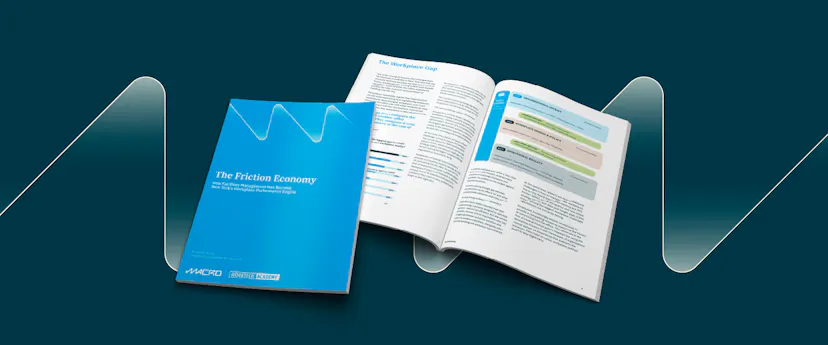
New opportunities for Facilities Management highlighted in The Friction Economy Report
Macro x WORKTECH Academy - The Friction Economy: how facilities management has become New York's workplace performance engine
Why Great FM Strategies Fail During Execution: Amanda Muzzarelli Joins IFMA's Connected FM Podcast
Macro's Amanda Muzzarelli joins IFMA's Connected FM podcast to discuss institutional knowledge, psychological safety and leading FM teams through execution.

Bringing brands to life: What makes a store feel like the brand? Patricia Soria & Lisa Holmes explain
Explore how facilities management helps retailers deliver consistent brand experiences, improve operational performance and support customer experience across complex retail estates.
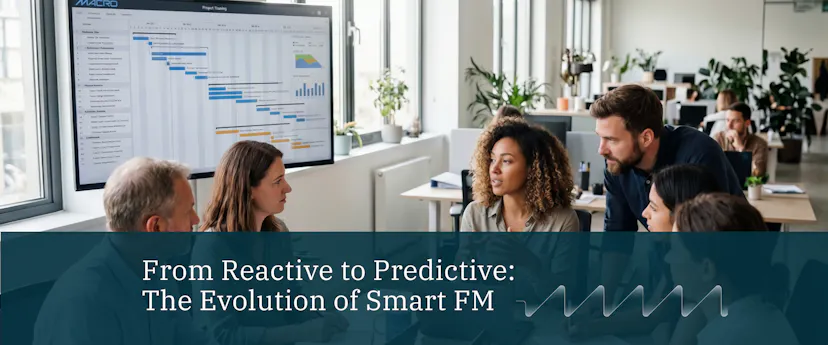
From Reactive to Predictive: The Evolution of Smart Facilities Management
Facilities management isn’t being disrupted by new technology, it’s evolving through the better use of technology that already exists.
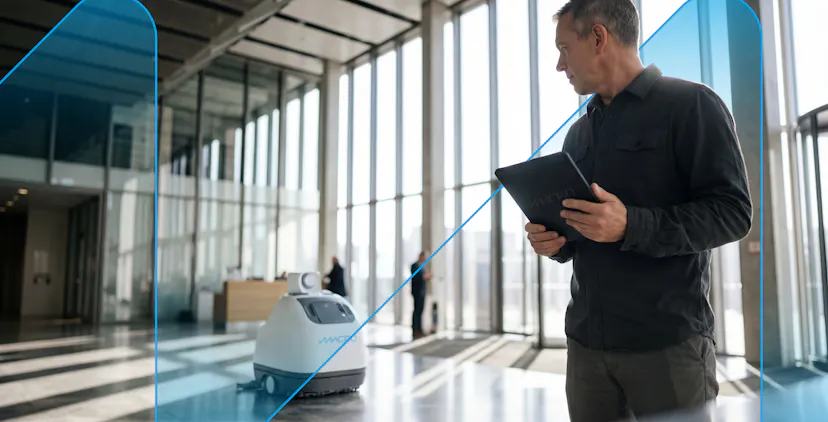
Managing Facilities across Global Portfolios: From Operational Complexity to Strategic Advantage
Exploring the evolving role of facilities management in supporting global real estates

PPN026: A Macro Perspective on the UK's Revised Social Value Model
Macro explores the impact of PPN026, the latest update to the UK Government's Social Value Model. Effective from January 2027.