
Perspectives
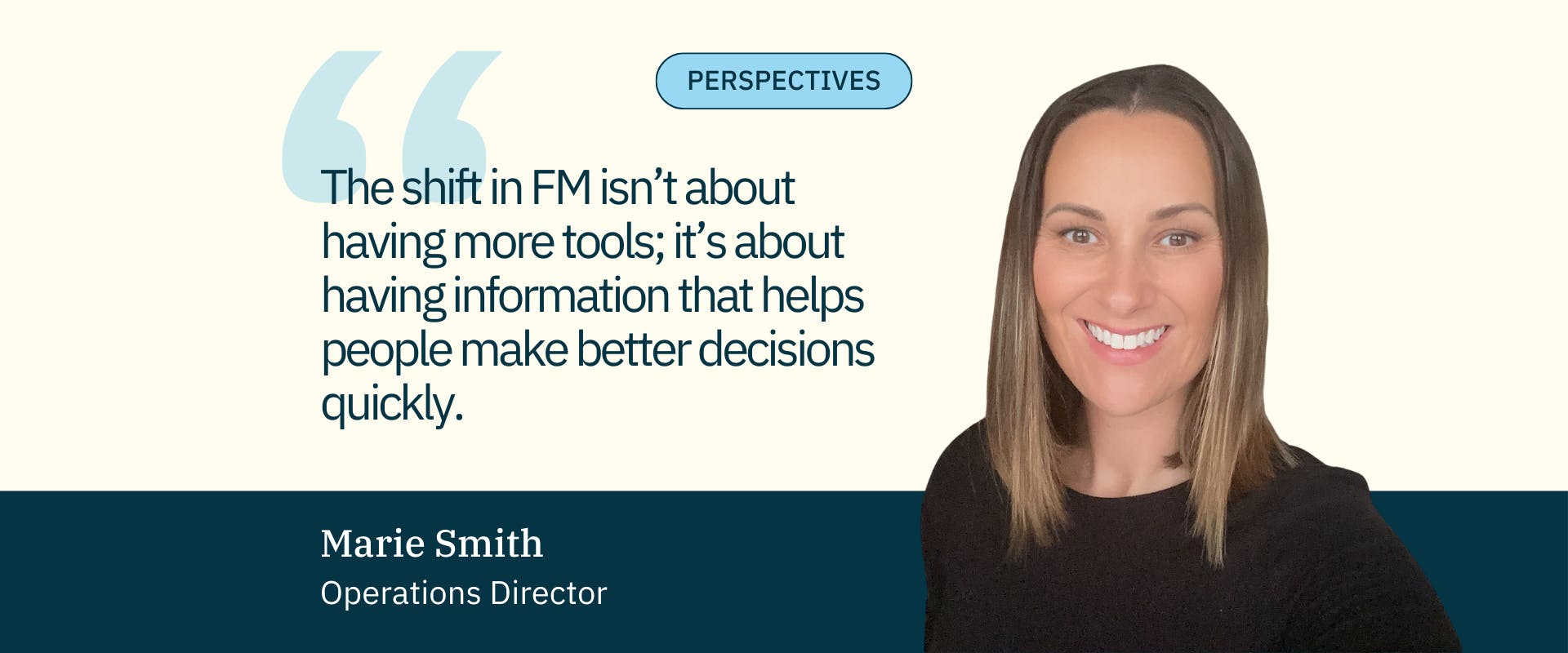
Introducing Marie Smith, Operations Director for the UK and Europe
Macro has appointed Marie Smith to oversee facilities management (FM) operations across the UK and Europe, strengthening its ability to deliver consistent, high-performing FM at scale. With a background spanning construction, complex operational delivery and senior FM leadership, Marie brings a grounded, delivery-led perspective to the role. In this interview, Marie shares what drew her to Macro, how client expectations have evolved, and how FM can play a more strategic role in shaping workplaces that truly support people and performance.
Congratulations on your new role! Can you tell us a bit about your background and what brought you to Macro?
My career began in construction and project delivery, working in live, high-pressure environments where collaboration, planning, and accountability were essential. That grounding gave me a strong understanding of how complex operations come together and what’s required to deliver consistently in real-world settings.
I later moved into senior operational leadership roles within FM, managing large, complex portfolios across corporate and critical environments. That progression allowed me to combine a delivery-focused mindset with a broader view of workplace performance and experience, ensuring environments not only operate well but genuinely support people in their day-to-day work.
What drew me to Macro was its ability to adapt and evolve alongside its clients. The management-led model, combined with Macro’s global reach, strong governance, and intelligent supply-chain approach, creates real agility, allowing services to flex as client needs change, without losing control or consistency. It’s a model that gives clients flexibility without losing grip and gives teams clarity about how great FM is delivered.
What excites you most about leading FM operations across the UK and Europe at this point in time?
What excites me most is the opportunity to bring better alignment across regions. Too often, UK and European operations are managed separately, which can make delivery feel more complicated than it needs to be.
Leading across both allows us to simplify that. By creating clearer ways of working, improving knowledge sharing, and joining up governance and supply-chain approaches, we can make FM feel more consistent for clients and more joined up for teams. There’s also a real opportunity to learn across borders. Different markets do things well in different ways, and when that insight is shared, everyone benefits. Bringing that thinking together, while still respecting local needs, is where I see the biggest impact and it’s what makes the role genuinely interesting for me.
How have client expectations evolved since the pandemic in terms of workplace experience, sustainability, and technology?
Clients are much clearer now about what they expect from the workplace. It’s no longer just about keeping buildings running, it’s about whether the workplace is actually supporting how people work and whether investment is being directed to the right areas.
Workplace experience, sustainability, and technology are far more connected than they used to be. Clients want to understand what’s happening now, not months later, and they want information they can use to make decisions. That applies just as much to sustainability performance as it does to space usage or service delivery.
There’s also a strong expectation around simplicity. Clients don’t want to pull information from multiple systems or reports. They want a clear, joined-up view that helps them see the full picture and act with confidence. At Macro, the ability to bring those elements together in a practical, usable way is a real strength.
How will you be supporting teams across the UK and Europe to deliver excellence and drive continuous improvement?
For me, it starts with clarity. People do their best work when they understand what good looks like, what’s expected of them, and how their role fits into the bigger picture. Across the UK and Europe, that means clear standards, while still respecting local context.
I’m also focused on connecting teams and encouraging knowledge sharing across regions. Different markets face different challenges, and when that experience is shared, performance improves naturally. Most importantly, I want teams to feel supported. Being visible, listening, and creating space for honest conversations builds trust, which is what drives continuous improvement.
How do you see FM contributing to broader workplace strategy today?
Workplace strategy is no longer about setting a vision and hoping it lands. It’s about making ongoing, informed decisions as organisations change. FM contributes by grounding those decisions in what’s happening across the estate. Because FM sees how space is used, where friction shows up, and where cost, risk, and experience collide, it brings a reality check to workplace conversations.
It helps organisations move away from assumptions and towards choices based on evidence and impact. When FM is used well, it stops workplace strategy becoming theoretical. It keeps it practical, responsive, and focused on what will genuinely work for the people using the space.
What role does data and technology play in shaping the next generation of FM services?
For me, data and technology only add value when they make things clearer, not more complicated. The shift in FM isn’t about having more tools; it’s about having information that helps people make better decisions quickly.
Clients want to understand how their estates are performing without having to interpret multiple reports or systems. When data is joined up and accessible, it gives a clear view of space use, sustainability performance, and risk, and that makes it much easier to prioritise and plan.
Used well, technology helps FM become more proactive. It reduces surprises, supports earlier intervention, and gives both clients and teams the confidence that decisions are based on what’s actually happening, not assumptions.
How are organisations balancing their real estate footprints with the rise of hybrid and flexible working models?
Organisations are being far more deliberate about their space. Rather than focusing purely on size, they’re looking at how space is used and what it needs to support when people come together.
Hybrid working hasn’t removed the need for physical workplaces, but it has changed their role. The emphasis is now on flexibility and collaboration, with spaces working harder to support culture and performance rather than simply accommodating headcount.
What advice would you give to young professionals looking to build a career in FM or corporate real estate?
Get involved wherever you can. Spend time on site, ask people what they’re doing and why, and don’t be embarrassed to ask questions. Most people are happy to explain things, and that’s how you start to build confidence.
Most importantly, be curious, be present, and don’t feel you need to have all the answers. We’re all still learning, whatever stage we’re at.
View our current vacancies here.
More perspectives
Why Great FM Strategies Fail During Execution: Amanda Muzzarelli Joins IFMA's Connected FM Podcast
Macro's Amanda Muzzarelli joins IFMA's Connected FM podcast to discuss institutional knowledge, psychological safety and leading FM teams through execution.
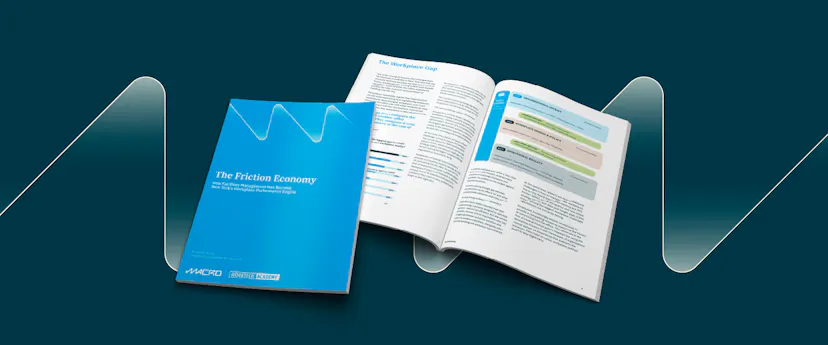
New opportunities for Facilities Management highlighted in The Friction Economy Report
Macro x WORKTECH Academy - The Friction Economy: how facilities management has become New York's workplace performance engine

Inside Macro’s Smart Building Solution - How We Deliver Intelligent FM
Discover Macro’s Smart Building Platform – combining IoT, AI, and digital twin technology to deliver predictive maintenance, energy efficiency, and people-focused spaces. Scalable, secure, and data-driven, our solution transforms facilities management with real-time insights, sustainability gains, and smarter operations.

Bringing brands to life: What makes a store feel like the brand? Patricia Soria & Lisa Holmes explain
Explore how facilities management helps retailers deliver consistent brand experiences, improve operational performance and support customer experience across complex retail estates.
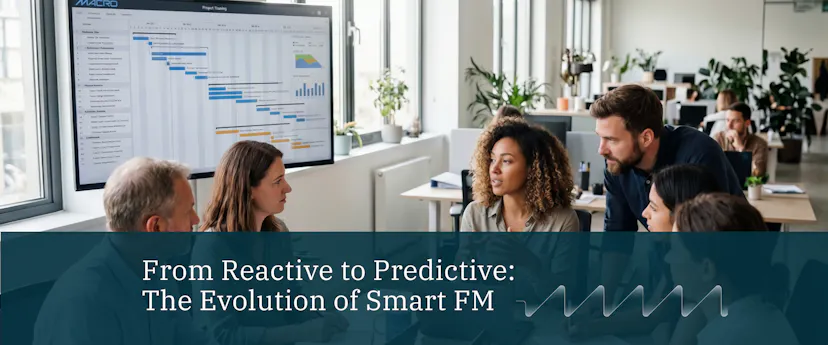
From Reactive to Predictive: The Evolution of Smart Facilities Management
Facilities management isn’t being disrupted by new technology, it’s evolving through the better use of technology that already exists.
Managing Facilities across Global Portfolios: From Operational Complexity to Strategic Advantage
Exploring the evolving role of facilities management in supporting global real estates