
Perspectives
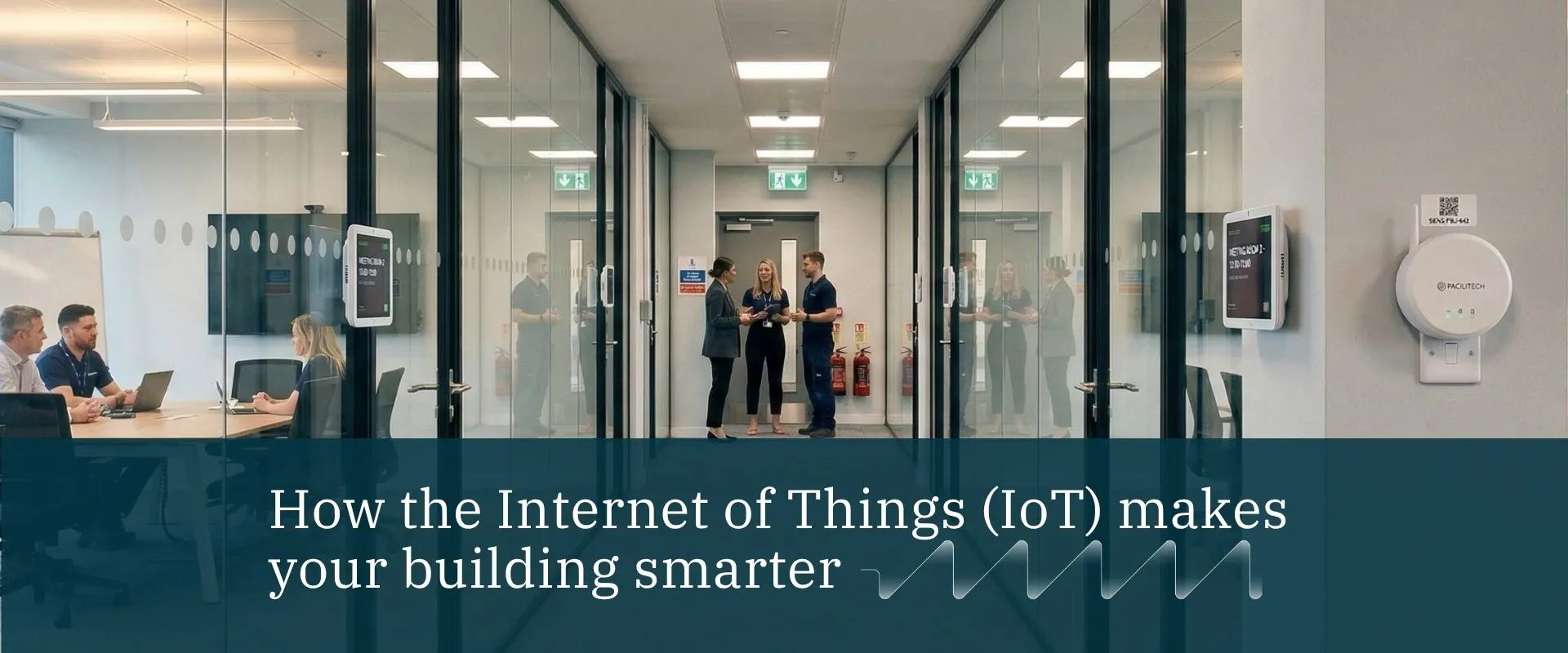
Internet of Things in Facilities Management - How IoT Transforms FM
Author: Enric Paradela Delgado, Senior Technology and Innovation Manager
The Internet of Things (IoT) is a network of physical devices, from sensors and meters to cameras and thermostats, that collect and exchange data via the internet. In the context of IoT facilities management, these connected devices give building and operations teams unprecedented visibility into how their spaces are performing, in real time and at scale.
Businesses are beginning to adopt IoT in FM because the business case is compelling: smarter monitoring reduces waste, prevents costly failures, and creates more comfortable environments for the people who use them. Rather than reacting to problems after they occur, IoT enables a proactive, data-led approach to building management. When integrated into your FM processes, IoT becomes the engine of a more efficient, resilient operation.
The future of IoT in FM is one of deeper integration with artificial intelligence, predictive analytics, and smart building ecosystems. As connectivity becomes ubiquitous and hardware costs continue to fall, IoT is set to become a standard part of how facilities are managed across all sectors.
What is IoT in Facilities Management?
IoT in facilities management refers to the use of connected devices and sensors embedded throughout a building or estate to monitor conditions, track asset performance, and automate responses – all without manual intervention. In contrast to traditional FM, which relies on scheduled maintenance visits, manual inspections, and reactive repairs, IoT in FM creates a continuously updated picture of how a building is functioning.
The foundation of this approach is sensors: devices that measure everything from temperature and humidity to occupancy levels and energy consumption. These sensors can feed data into centralised cloud platforms, where it is processed and made available via intuitive dashboards, and can also be integrated directly into Building Management Systems (BMS) for optimised dynamic controls based on real-time data. Facilities managers can then act on real-time insights rather than working from historical schedules or gut instinct, enabling a genuinely proactive approach to building operations.
The benefits extend across the operation: maintenance becomes more targeted, energy use more efficient, and the employee experience measurably improved. This is why Macro’s Facilities Management services increasingly incorporate IoT as a core part of the value we deliver to clients. The internet of things in facility management is not a future concept. It is available, scalable, and proving its worth right now.
Key IoT Technologies in Facilities Management
IoT facilities management draws on a range of technologies working in concert:
- Sensors (temperature, air quality, occupancy): Physical sensors monitor environmental conditions across a building in real time. Temperature sensors flag HVAC inefficiencies; air quality monitors track CO₂ and particulates; occupancy sensors reveal how spaces are actually being used and feed actionable data to your team.
- Wireless connectivity: Wi-Fi, Bluetooth, Zigbee, and LPWAN protocols allow sensors and devices to communicate without extensive cabling infrastructure. This makes IoT systems easier and more cost-effective to deploy across large or complex estates.
- Smart meters: Connected utility meters track electricity, gas, and water consumption at granular intervals. They enable accurate cost attribution, identify waste patterns, and support sustainability reporting, often without requiring on-site reading visits.
- Cloud platforms and dashboards for real-time monitoring: All data from connected devices is aggregated in cloud-based platforms. Facilities managers access this through live dashboards, giving visibility of every system and asset from a single interface, at any time.
- Remote management and alerts via mobile and other systems: IoT systems can push alerts directly to mobile devices when anomalies are detected: a temperature spike, a door left unsecured, a sensor reading outside normal parameters. They can also send requests to the helpdesk of CAFM systems or trigger alerts in the local BMS system. Managers can investigate and respond instantly, even when off-site.
Why IoT might benefit your business
The advantages of IoT in facility management extend well beyond technical novelty. Here are the key areas where IoT delivers measurable impact:
Operational efficiency and workflow optimisation
IoT eliminates much of the guesswork from day-to-day facilities management. By automating routine monitoring and enabling condition-based workflows, your team spends less time following fixed schedules and optimising their time following an on-demand service approach. Streamlined processes mean fewer delays, fewer gaps, optimised service scope and costs, and a building that simply runs better.
Reduced maintenance costs through predictive insights
When sensors detect a developing fault like a motor drawing excess current or a pipe showing legionella risk, they trigger alerts before the problem becomes a breakdown. This predictive maintenance approach allows for planned, targeted repairs rather than expensive emergency callouts, extending asset life and reducing the total cost of maintenance significantly.
Improved occupant and employee satisfaction
Remote control over temperature, airflow, and lighting means environments can be precisely calibrated to occupant preferences and usage patterns. Comfortable, responsive workplaces improve employee wellbeing and productivity. The link between physical environment and performance is well established. IoT makes it actionable.
Data-driven decision-making for FM Strategies
Every connected device generates data. Over time, this builds a rich picture of asset performance, space utilisation, and energy consumption. Facilities managers can use these insights to justify investment decisions, renegotiate service contracts, and model the impact of proposed changes. In turn, they help transform FM from a cost centre into a strategic function.
Improved security
IoT-connected cameras, smart locks, and alarm systems give facilities teams remote visibility of access points and security events across an entire estate. Incidents can be detected and responded to in real time, while access logs provide a full audit trail. Staff feel safer, and business assets are better protected. [Add internal link to ‘AI in Facilities Management’ and ‘enhances employee experience’ once live]
How to implement IoT into your FM strategy
Introducing IoT into your FM operation does not need to be an all-or-nothing exercise. A structured, phased approach ensures the technology delivers value without disrupting existing workflows:
Assessing needs and current FM systems: Begin by auditing your existing infrastructure. Understand which assets, systems, and spaces would benefit most from monitoring, and identify any legacy technology that may affect compatibility.
Selecting appropriate IoT technologies: Not every building needs the same sensors. Work with a specialist to identify the right hardware, connectivity protocols, and platforms for your specific context, whether a single office or a multi-site estate.
Piloting projects and test environments: Before full deployment, you could run a controlled pilot in a defined area of your building. This allows you to test performance, refine configurations, and build confidence before scaling.
Training, adoption, and integration with existing workflows: Technology only delivers value if people use it. Invest in clear, role-specific training and ensure IoT dashboards and alerts integrate naturally into how your facilities team already works.
Monitoring, analysis, and refining for ongoing improvement: IoT is not a set-and-forget solution. Regular review of the data it generates allows you to identify new opportunities, address gaps, and continually improve performance.
Macro supports clients through every stage of this process, from initial assessment and technology selection through to ongoing management and optimisation. Our team has the experience to ensure your IoT investment is targeted, proportionate, and effective.
Common challenges and how to overcome them
As with any significant change to operational infrastructure, the move to IoT-enabled FM brings challenges that are best anticipated and managed proactively.
Data security and privacy concerns
Every connected device is a potential entry point for a cyberattack, and poorly secured IoT networks can expose confidential operational data. The mitigation is robust and ensures peace of mind: end-to-end encryption, role-based access controls, connectivity infrastructure separate from the client network, and regular security auditing. Working with vendors who hold recognised security certifications is essential, as is having a clear data governance policy in place before deployment.
Integration with legacy systems
Older building management systems were not designed with IoT connectivity in mind. Integrating modern IoT platforms with legacy hardware can be technically complex. A gradual migration strategy or the use of middleware that bridges old and new technology can smooth this transition without requiring wholesale replacement from the outset.
Ensuring staff adoption and understanding
New technology can prompt scepticism or anxiety among staff, particularly if the change feels sudden or poorly explained. Detailed, empathetic training that acknowledges these concerns while demonstrating clear benefits is key. Involving team members in the pilot phase, and recognising early adopters, helps to build confidence and a culture of engagement.
Best Practice: phased rollouts, Clear KPIs, robust support, and vendor partnerships
Successful IoT implementation is built on clarity and structure. Introduce changes incrementally so teams can adapt at each stage. Define KPIs before you start so progress can be measured objectively. They might include energy savings, reduction in reactive maintenance calls, or improvements in space utilisation. Ensure employees have access to ongoing support, and choose vendor and delivery partners with a proven track record in FM environments. For more on where all of this is heading, see our article on the future of Facilities Management.
How we utilise IoT
At Macro, IoT is not an add-on. It is embedded in how we deliver FM services. We deploy sensor networks and connected platforms as part of our standard approach to building management, using real-time data to inform service scheduling, space management, and energy performance across client sites.
Our fm24 help desk sits at the heart of this capability. Sensors pick up issues like an HVAC anomaly or leak detection. When IoT-enabled alerts are triggered, those signals feed directly into our managed response workflows. This means issues are identified, logged, and actioned faster than in a conventional FM model, often before the occupant is even aware of a problem.
In practice, this activity has delivered tangible results for our clients: reduced energy costs through automated monitoring, fewer reactive maintenance callouts through predictive fault detection, and richer data to support long-term estate planning. Our FM consultancy team works with clients to design IoT strategies that are proportionate to their estate, integrated with their existing systems, and built for long-term performance.
Looking ahead: The future of IoT in Facilities Management
IoT in FM is already delivering significant value, but the technology continues to evolve rapidly. Three trends in particular are set to define the next phase of development:
- Integration with AI, machine learning, and predictive analytics: IoT generates enormous volumes of data, and before AI, sensors provided a useful historical baseline of how a building was functioning. Today, when combined with AI and machine learning, that data becomes genuinely predictive. Beyond flagging current anomalies, it forecasts future failures, models energy demand, and automatically optimises building systems. The convergence of IoT and AI represents a step change in what FM can deliver.
- Smart building ecosystems and fully connected workplaces: The next generation of buildings will have connectivity built in from the ground up. Access control, HVAC, lighting, occupancy management, security, and energy systems will all operate as a single integrated ecosystem with IoT as the connective layer. For occupiers, this means environments that respond intelligently to how they are used. For facilities managers, it means unprecedented levels of control and insight.
- Sustainability and net zero targets: IoT is increasingly central to how organisations meet their environmental commitments. Connected energy management systems, automated controls, and real-time consumption data allow facilities teams to identify waste, reduce carbon output, and demonstrate progress against net zero targets with precision. As regulatory pressure and stakeholder expectations around sustainability continue to grow, IoT will be an essential tool for compliant, evidenced environmental performance.
These developments sit at the intersection of FM and technology strategy. Macro publishes regularly on AI in FM and future trends in smart facilities. We encourage you to explore our full range of perspectives for the latest thinking on where the sector is heading.
Summary
IoT in facilities management represents a fundamental shift in how buildings are understood and managed. By connecting physical assets to data platforms, facilities teams move from reactive to proactive, identifying issues earlier, using resources more efficiently, and creating better environments for the people who occupy them.
The benefits are clear: reduced maintenance costs, improved energy performance, stronger security, and data that supports better long-term decisions. The challenges around integration, security, and adoption are real but well understood, and manageable with the right approach and the right partners.
Best practice centres on phased implementation, clear measurement, and ongoing refinement. Businesses that approach IoT as a strategic investment rather than a one-time project are those that realise the greatest gains, both in cost efficiency and in operational resilience.
If you are ready to explore how IoT-enabled FM could work for your organisation, Macro is here to help. Our team combines deep FM expertise with proven technology capability to deliver solutions that are practical, scalable, and tailored to your needs.
Contact us to start the conversation.
More perspectives
Why Great FM Strategies Fail During Execution: Amanda Muzzarelli Joins IFMA's Connected FM Podcast
Macro's Amanda Muzzarelli joins IFMA's Connected FM podcast to discuss institutional knowledge, psychological safety and leading FM teams through execution.
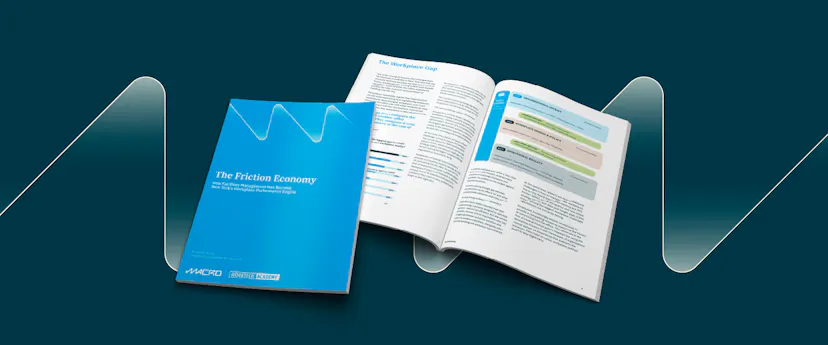
New opportunities for Facilities Management highlighted in The Friction Economy Report
Macro x WORKTECH Academy - The Friction Economy: how facilities management has become New York's workplace performance engine

Inside Macro’s Smart Building Solution - How We Deliver Intelligent FM
Discover Macro’s Smart Building Platform – combining IoT, AI, and digital twin technology to deliver predictive maintenance, energy efficiency, and people-focused spaces. Scalable, secure, and data-driven, our solution transforms facilities management with real-time insights, sustainability gains, and smarter operations.

Bringing brands to life: What makes a store feel like the brand? Patricia Soria & Lisa Holmes explain
Explore how facilities management helps retailers deliver consistent brand experiences, improve operational performance and support customer experience across complex retail estates.

From Reactive to Predictive: The Evolution of Smart Facilities Management
Facilities management isn’t being disrupted by new technology, it’s evolving through the better use of technology that already exists.
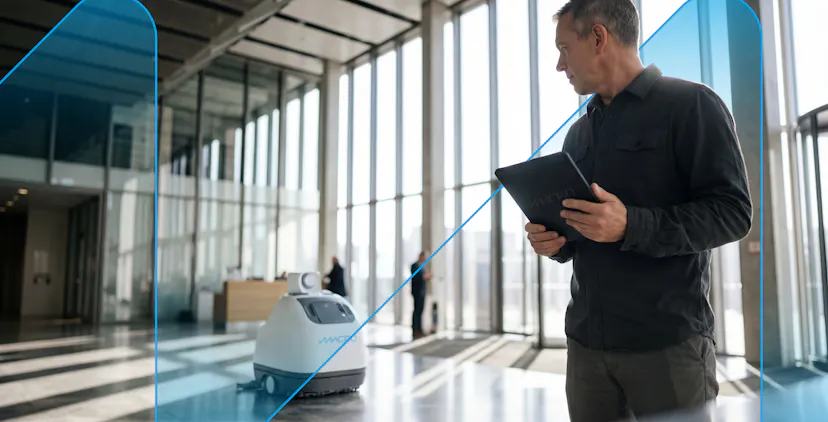
Managing Facilities across Global Portfolios: From Operational Complexity to Strategic Advantage
Exploring the evolving role of facilities management in supporting global real estates