
Perspectives

Unlocking Cost Efficiencies in Facilities Management (Without Cutting Corners)
Insights at a glance
Cost reduction starts with strategy: The most effective savings come from clear objectives that balance cost, service quality, and employee experience
Move from reactive to proactive maintenance: Planned maintenance and long-term asset planning can reduce emergency repairs, lower costs, and extend asset life.
Align services to actual demand: Using occupancy, usage, and performance data helps organisations right-size FM services and eliminate unnecessary spend
Technology is an enabler, not the answer: Tools such as IoT sensors, BMS platforms, and automation deliver value when they support specific operational goals
Data drives smarter decisions: Understanding where money is spent and how services perform enables organisations to identify efficiencies and deliver sustainable savings
Rising costs, ageing assets, and increasing workplace expectations are putting pressure on facilities teams to deliver more with less.
The good news? With the right strategy, facilities management (FM) can unlock significant cost savings without compromising service quality. From smarter planning to better use of data and technology, there are multiple ways to reduce operational spend while strengthening performance.
Your existing facilities management solution could be hiding up to 30% in potential savings. Just by taking a fresh look at the processes and systems that underpin your service solution, you can find ways to rationalise, streamline and integrate new technologies to the benefit of substantial cost efficiencies.
Here are eight practical approaches to help organisations drive cost efficiencies across their FM operations.
01 Start with clear objectives
Effective cost reduction begins with clarity.
Before making any changes, define what you’re trying to achieve, whether that’s reducing expenditure, improving service quality, or enhancing the workplace experience. Every decision should be considered against the balance between cost, service, and people impact.
By setting clear priorities early on, you create a framework for identifying savings that align with broader business goals. This step will be essential scene-setting before you start working through viable solutions to cost savings
02 Define roles, scope and delivery model
Understanding how your FM services are structured is critical to identifying efficiencies.
- Clarify which responsibilities sit in-house versus outsourced
- Ensure all services meet statutory compliance requirements
- Identify opportunities to streamline roles or consolidate services
For organisations new to outsourcing, taking a phased approach can help manage risk and assess impact. For those with established models, reviewing existing contracts and performance can uncover new cost-saving opportunities.
03 Shift from reactive to planned maintenance
Reactive maintenance is one of the biggest drivers of unnecessary cost. Typically, better managing spend means reducing reactive spend and increasing planned spend.
A more proactive approach can significantly reduce expenditure over time:
- Move towards preventative maintenance programmes
- Plan capital spend across a 3–5 year cycle
- Invest in asset upgrades that reduce long-term repair needs
By anticipating issues before they arise, organisations can avoid costly emergency interventions and extend asset life.
Streamlining supply chains
Macro worked with a global retail client to reduce its existing supply chain by more than 75%, following a widespread analysis of existing vendor contracts.
We undertook a large-scale data collection process, which was often challenging as in many places vendor information was difficult to find or no contract existed at all. By strengthening contract terms, rationalising and consolidating 70 suppliers, we reduced invoicing from 1,000 annually to under 100, and 5% savings were made on planned maintenance and 25% projected on reactive maintenance. Macro has since entered a Principal Contractor model contract, from which we have continued to drive savings.
04 Align services with actual demand
On the “soft services” side of the equation, it’s all about evaluating what services you actually need and how they meet your business objectives. In many organisations, FM services continue at levels that no longer reflect how spaces are used.
Typically, your spend on soft services will be higher than on hard services, so it’s about considering the right service levels, auditing what service is actually being received, and considering frequency, usage and occupancy data to determine whether the service meets your business objectives and whether you can drive any efficiencies.
To optimise spend:
- Review service frequency based on occupancy and usage data
- Audit service delivery against actual requirements
- Adjust service levels to better match business needs
For example, cleaning schedules, waste collection, or front-of-house services can often be refined using data insights, delivering the same outcomes more efficiently. For example, could you put a tablet at the front desk to enable self check in? Could you make your waste collection or cleaning more proactive by using sensors to monitor usage? There are so many potential places to look for cost savings, but ultimately it’s about getting the balance right.
05 Use technology strategically
Technology can play a powerful role in reducing operational costs, but only when aligned to clear objectives.
Solutions such as:
- IoT sensors for real-time monitoring
- Building Management Systems (BMS) for centralised control
- Robotics for routine tasks
…can all drive efficiencies. However, technology should be viewed as part of a wider strategy. not a standalone solution.
The most successful implementations are those that support specific goals, such as reducing energy consumption, improving asset performance or enhancing occupant experience.
Technology can be enormously valuable from a cost standpoint, but should be seen as an essential part of a wider solution rather than solutions in their own right.
Cleaning robots save 23% in cleaning cost
For a retail client in North America, the introduction of cleaning robots saved 23% in cleaning costs and 1,200 annual cleaning hours, all while maintaining quality.
Originally trialled at two UK locations, the robotics achieved an ROI on the capital expenditure of 7 months and 2 years, respectively, and savings of up to of £30K over three years. Daily cleaning time was reduced by up to 75% per shift, even with a rigorous set of tasks, including removing window smudges at high levels, mopping in hard-to-reach areas, and dealing with unplanned cleaning needs, like attending to spills.

06 Take control of energy spend
With energy costs continuing to rise, this remains one of the most significant opportunities for savings. Organisations can take action at multiple levels:
- Optimise Building Management System (BMS) settings to align energy use with occupancy
- Introduce smarter scheduling and controls
- Invest in more energy-efficient assets and systems
Whether through operational adjustments or longer-term investment, meaningful savings can be achieved while also supporting sustainability goals
Optimising BMS with occupancy levels
In the Middle East, Macro helped a commercial tower to reduce its annual utility costs by 31%, due in part to adjustment of BMS settings that ensured the HVAC system automatically shut down when spaces weren’t occupied.
Other crucial activities were similarly aligned to the building’s use and performance, to drive savings without compromise. For example, the installation of water aerators on all taps across common areas minimised use while still meeting user need. Replacement of conventional lights with energy-efficient LED and implementation of Solar PV panels cut monthly electricity bills, thereby meeting the sustainability goals of the client while maintaining a consistent quality of experience.
07 Focus on long-term value, not short term cuts
Sustainable cost reduction comes from strategic decision-making, not one-off cuts.
Key approaches include:
- Rightsizing portfolios to reflect actual business needs
- Strengthening supplier performance through KPIs and SLAs
- Regularly reviewing supplier contracts for value and efficiency
When implemented effectively, these strategies can deliver significant savings while maintaining, or even improving, service quality
It’s important to note that each of these methods requires effective communication – cost savings are always achievable but there are a number of practicalities to making sure your stakeholders buy into the change.
Making financial sense
For a global financial services client in North America, Macro has achieved a 33% reduction in energy and 43% reduction in water across their portfolio over the lifetime of our contract.
To achieve these figures, we have proposed and implemented a wide range of sustainability initiatives, ranging from more efficient cleaning supplies to a rationalised printing system. Recently, we introduced solar canopies and roof-mounted solar panels across the business’ locations. These solutions have an ROI of just over 3 years and projected savings over the lifetime of the technology of over £2M.

08 Put data at the centre of decision-making
Data is one of the most powerful tools in cost optimisation. From footfall and occupancy to maintenance and service performance, data provides insight into:
- Where money is being spent
- How effectively services are delivered
- Where efficiencies can be realised
With data comes an understanding of the baseline, and with that understanding organisations can make informed, confident decisions that drive measurable results. In every business, there is ample potential for cost savings – it’s about knowing where to look.
Unlocking Smarter Cost Savings in FM
Reducing operational costs in facilities management isn’t about cutting corners, it’s about making smarter, more informed decisions.
By combining strategic planning, data-driven insight, and the right use of technology, organisations can unlock meaningful savings while enhancing service delivery and workplace experience.
There is significant potential for cost optimisation in every portfolio. The key is knowing where to look and how to act.
Ready to improve how your facilities perform?
Talk to our FM experts about your facility challenges and opportunities. Whether you're managing a multi-site estate, navigating compliance across regions, or simply spending too much on reactive maintenance, we're here to support.
More perspectives

IFMA World Workplace 2026: Macro to Join Key Conversations Shaping the Future of Facilities Management
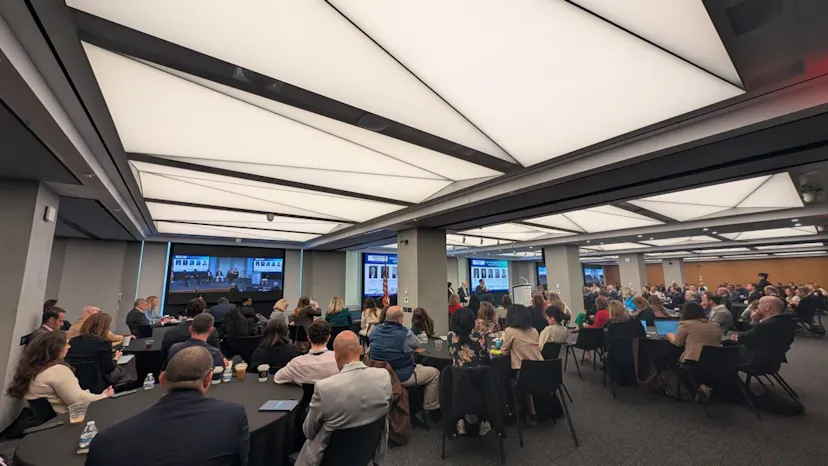
Macro is proud to be attending IFMA World Workplace 2026, taking place in Anaheim, California, from 18-20 November.
Invisible Until It Isn’t: What WORKTECH26 New York Taught Us About the Frictionless Workplace
Takeaways from WORKTECH26 New York: Macro on FM and the fight for a frictionless workplace, magnets not mandates, and people-first workplace design.

What is CAFM?
CAFM stands for Computer-Aided Facility Management. At its core, it's FM management software designed to plan, manage, and maintain physical spaces, assets, and operations from a single platform.

Bringing the Brand to Life: Key Takeaways from Macro's Retail FM Event in London
Macro welcomed more than 70 retail property, facilities management and workplace leaders to London for a Retail FM event exploring the role of FM in bringing brand's to life through in-store retail experiences

What is SLA in facilities management?
Learn what an SLA in facilities management is, with examples of SLA maintenance and property maintenance agreements that set clear service standards.
Why Great FM Strategies Fail During Execution: Amanda Muzzarelli Joins IFMA's Connected FM Podcast
Macro's Amanda Muzzarelli joins IFMA's Connected FM podcast to discuss institutional knowledge, psychological safety and leading FM teams through execution.