
Perspectives
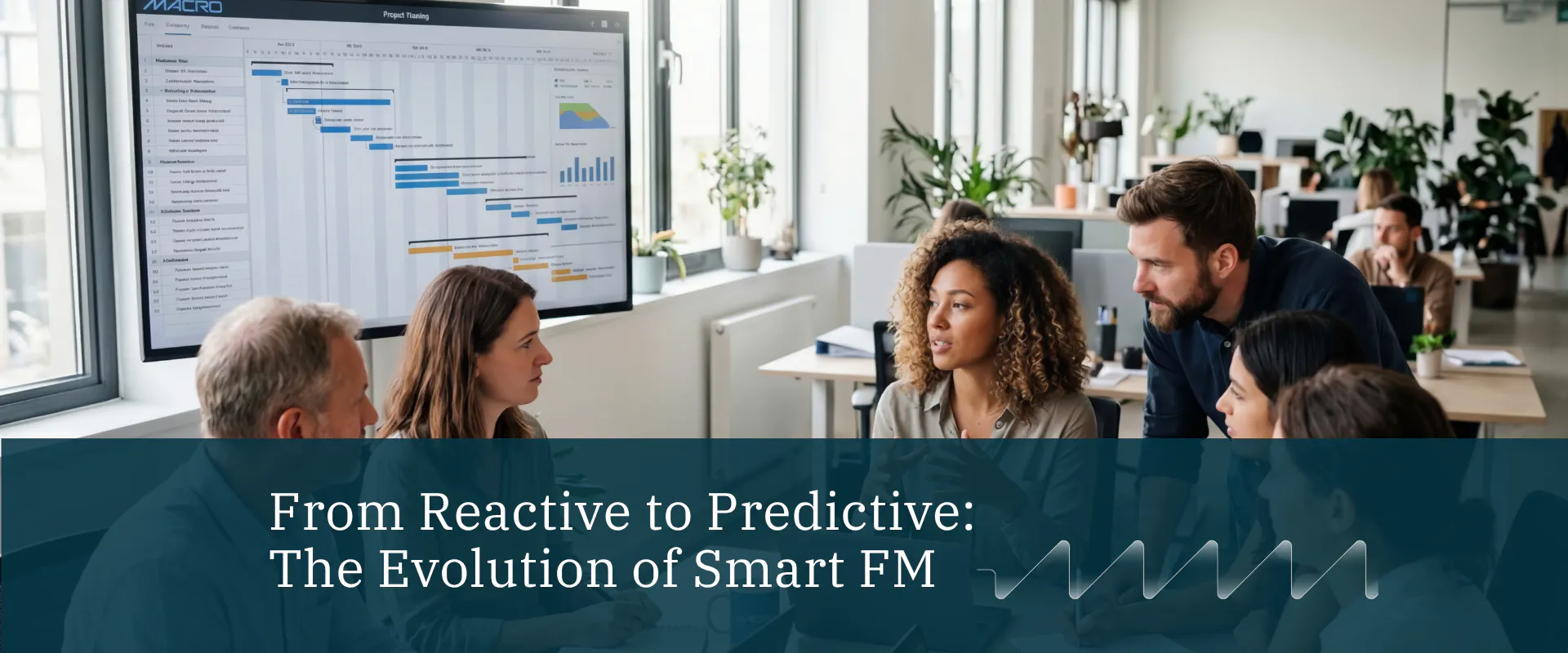
From Reactive to Predictive: The Evolution of Smart Facilities Management
Facilities management isn’t being disrupted by new technology, it’s evolving through the better use of technology that already exists.
The Internet of Things (IoT) has been part of buildings for years. Sensors, meters, and connected systems are nothing new. What is changing is how that data is used.
We are moving beyond simply monitoring buildings to actively managing performance in real time - shifting from reactive maintenance and fixed schedules to proactive, predictive, and intelligence-led operations.
This is the real transformation: not more data, but better decisions.
From Reactive to Predictive: A Shift in Mindset
IoT connects assets, systems, and environments to a continuous flow of data—but data alone doesn’t create value. The shift happening in facilities management is about turning insight into action.
Instead of asking “what’s gone wrong?”, FM teams are increasingly asking: “What’s about to go wrong and how do we prevent it?”
This is more than operational improvement. It’s a shift from reactive management to predictive strategy. Maintenance becomes more targeted. Energy use becomes more efficient. The workplace experience becomes measurable and manageable.
Why This Shift is Accelerating Now
The move towards proactive FM isn’t theoretical, it’s being driven by real business pressures.
Organisations are expected to:
- Reduce operational cost and risk
- Enhance workplace experience and productivity
- Accelerate progress towards net zero
- Operate effectively with leaner resource models
Many already have the data but haven’t unlocked it’s value. What’s different now is the ability to connect systems, interpret insights and act in real time.
Smart buildings are no longer defined by the technology they contain, but by how effectively the technology is used.
At Macro, we see IoT not as a standalone technology, but as a foundational capability for modern facilities management, enabling FM teams to move from assumption to evidence, from manual effort to automation, and from cost centre to strategic contributor.
From Data to Action: What This Looks Like in Practice
In a modern smart building, sensors continuously capture data across:
- Temperature and air quality
- Occupancy and space utilisation
- Energy and water consumption
- Asset condition and performance
That data is aggregated into central platforms or integrated into existing BMS and CAFM systems, creating a live, unified view of operations.
The value lies in what happens next.
Instead of static dashboards, leading organisations are using this insight to:
- Trigger automated responses
- Prioritise interventions based on risk
- Optimise systems dynamically
- Inform strategic decision-making
The result is a shift from visibility to control.
Where Proactive FM Delivers the Most Value
The transition to proactive facilities management delivers impact across several key areas:
Predictive Maintenance (Beyond Preventative)
Traditional preventative maintenance reduces risk, but it still relies on assumptions. A proactive model uses real-time data to detect early indicators of failure, intervene before disruption occurs and reduce reliance on fixed schedules.
This leads to fewer reactive callouts, improved asset performance and more efficient use of maintenance resources.
Operational Efficiency at Scale
Inefficiency has long been one of the biggest hidden costs in FM. Proactive, data-led operations remove much of the manual burden
- Inspections become condition-based
- Workflows become prioritised and dynamic
- Resources are deployed where they are needed most
This creates a more agile, responsive operating model. Teams shift to condition-based workflows, focusing effort where it delivers the most impact.
Sustainability That’s Measurable and Actionable
Sustainability targets are now business-critical, but without data, they are difficult to deliver.
Smart building data enables:
- Real-time tracking of energy consumption
- Identification of inefficiencies and waste
- Continuous optimisation of building systems
This allows organisations to move from ambition to accountability, with clear, evidenced progress towards net zero targets.
A Workplace That Actively Supports Performance
The physical workplace has a direct impact on employee experience, but has historically been difficult to manage dynamically. With real-time data, buildings can respond to how they are used.
Temperature, lighting and airflow can be adjusted based on occupancy and demand, creative environments that are more comfortable, more productive, better aligned to how space is actually used.
The workplace becomes an active contributor to performance, not a static backdrop.
Implementation: Strategy Over Technology
One of the most common misconceptions is that becoming a “smart building” requires large-scale transformation.
In reality, the most effective approaches are:
- Phased rather than wholesale
- Targeted rather than generic
- Integrated rather than standalone
Start where the value is clearest. Prove it quickly. Then scale with confidence.
Success is not defined by the volume of technology deployed, but by how effectively it is embedded into day-to-day operations.
The Challenges and Why They’re Manageable
As with any shift in operating model, challenges exist but they are well understood.
- Cybersecurity – Managed through robust architecture, governance, and trusted partners
- Legacy integration – Addressed with phased approaches and bridging technologies
- Adoption and change – Driven by clear communication, training, and engagement
These are not barriers to progress, they are considerations that shape successful implementation.
What Comes Next: Smart Buildings as Performance Engines
The next stage of evolution is already emerging.
As IoT data is combined with AI and advanced analytics:
- Systems will move from reactive to self-optimising
- Maintenance will become increasingly predictive and automated
- Buildings will operate as fully connected ecosystems
This is where the concept of a smart building matures—from a connected asset to a performance engine for the organisation.
Facilities management, in turn, becomes a strategic function that directly influences cost efficiency, sustainability outcomes, employee experience and business performance
Our Perspective
At Macro, we see smart buildings and IoT not as standalone technologies, but as enablers of a more intelligent operating model.
Our approach is grounded in a simple principle: technology should serve the operation, not the other way around.
We work with clients to identify where data and connectivity will deliver the greatest impact, whether that’s asset performance, energy efficiency, or workplace experience, and integrate those capabilities into existing FM models in a way that is practical, scalable, and measurable.
This means:
- Focusing on outcomes rather than technology
- Integrating with existing systems where possible
- Embedding insight into everyday decision-making
- Continuously refining performance over time
Increasingly, we see smart building capability acting as the bridge between FM, sustainability, and workplace strategy - turning data into insight, and insight into action.
Final Thought
This evolution is not about adopting new technology, it’s about unlocking the full value of what is already in place.
Organisations that make this shift are moving:
- From reactive → to proactive
- From monitoring → to optimisation
- From cost management → to performance leadership
Smart buildings are no longer defined by the data they generate, but by the outcomes they enable.
The question is no longer whether this shift will happen. It’s how quickly organisations can turn insight into action and realise the value.
If you are ready to explore how IoT-enabled FM could work for your organisation, Macro is here to help. Contact us to start the conversation.
More perspectives
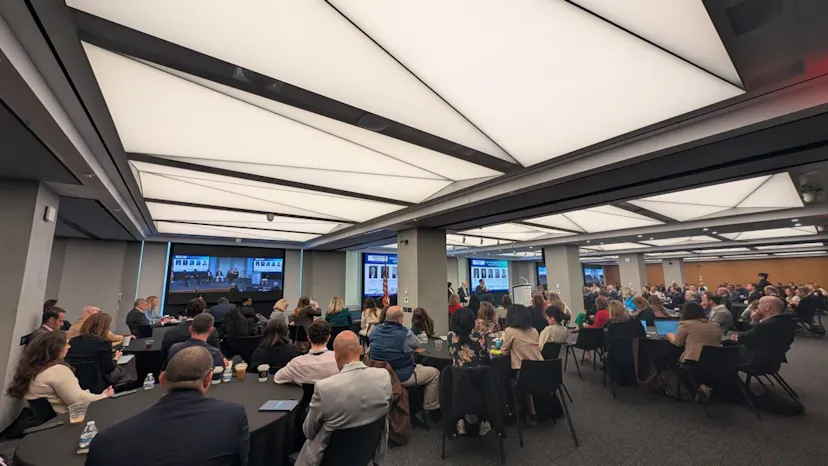
Invisible Until It Isn’t: What WORKTECH26 New York Taught Us About the Frictionless Workplace
Takeaways from WORKTECH26 New York: Macro on FM and the fight for a frictionless workplace, magnets not mandates, and people-first workplace design.

What is CAFM?
CAFM stands for Computer-Aided Facility Management. At its core, it's FM management software designed to plan, manage, and maintain physical spaces, assets, and operations from a single platform.

Bringing the Brand to Life: Key Takeaways from Macro's Retail FM Event in London
Macro welcomed more than 70 retail property, facilities management and workplace leaders to London for a Retail FM event exploring the role of FM in bringing brand's to life through in-store retail experiences

What is SLA in facilities management?
Learn what an SLA in facilities management is, with examples of SLA maintenance and property maintenance agreements that set clear service standards.
Why Great FM Strategies Fail During Execution: Amanda Muzzarelli Joins IFMA's Connected FM Podcast
Macro's Amanda Muzzarelli joins IFMA's Connected FM podcast to discuss institutional knowledge, psychological safety and leading FM teams through execution.
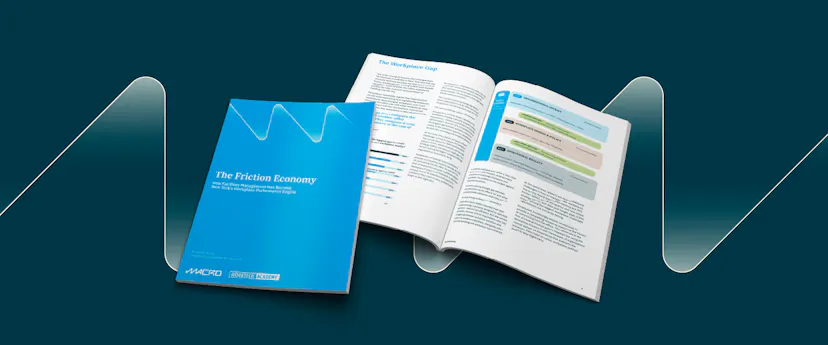
New opportunities for Facilities Management highlighted in The Friction Economy Report
Macro x WORKTECH Academy - The Friction Economy: how facilities management has become New York's workplace performance engine